





What's Happening?
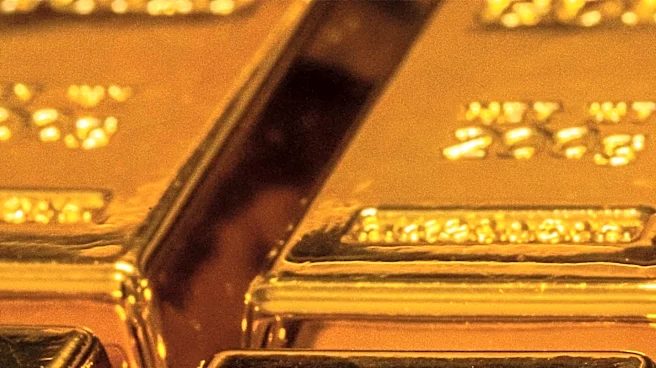
Gold prices are showing signs of stabilization after a period of volatility, influenced by a weaker US dollar and easing crude oil prices. The recent import-duty hike and rupee depreciation have cushioned local gold prices in India, despite a global price decline.
The World Gold Council reports strong central bank purchases, with 289 tonnes bought in Q2, marking a record for the second quarter. Asian demand, particularly from China, has strengthened, with institutional investors buying aggressively. The market remains cautious, awaiting fresh economic data, including US labor market reports, which could influence the Federal Reserve's rate decisions.
Why It's Important?
The stabilization of gold prices is significant for investors and economies reliant on gold as a hedge against inflation and currency fluctuations. Central bank purchases indicate a continued belief in gold's long-term value, despite recent price weaknesses. The geopolitical context, including US-Iran negotiations and oil price movements, adds complexity to the market dynamics. For India, the interplay between domestic and international prices affects consumer behavior and economic stability. The situation underscores the interconnectedness of global markets and the impact of geopolitical events on commodity prices.
What's Next?
Investors will closely monitor upcoming US labor market data, which could influence Federal Reserve policy and, consequently, gold prices. The potential for a September rate hike remains, depending on economic indicators. Additionally, developments in US-Iran relations and oil prices will be critical in shaping gold's near-term direction. As long as gold maintains its support level, it could gradually recover, with strategic buying likely on any price dips. The broader outlook remains constructive, with potential gains if geopolitical tensions ease and economic conditions stabilize.