



What's Happening?
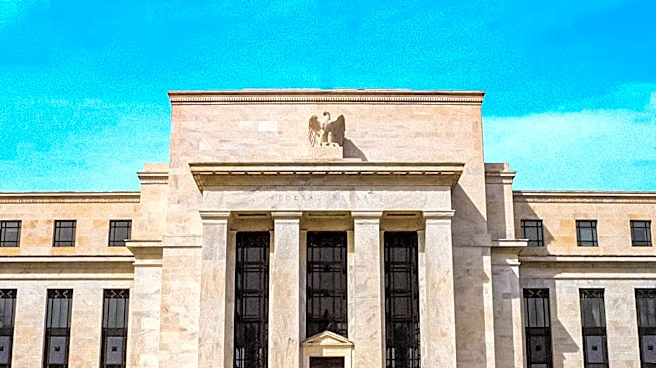
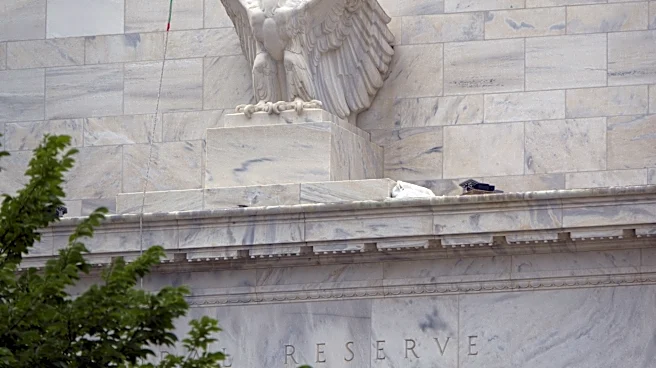
St. Louis Fed President Alberto Musalem has indicated that several more interest rate increases might be necessary before spring to bring inflation back to the Federal Reserve's 2% target. This sentiment aligns with the October minutes from the Federal Reserve,
where 'almost all participants' believed additional hikes were needed. Other Federal Reserve officials, such as Governor Christopher Waller, have also suggested significant moves, with Waller floating a 50 basis point hike in December. While expectations currently favor a 25 basis point increase at the next meeting, some members felt a larger move could be warranted. This hawkish stance from the Fed comes as retail sales in October rose by 0.2%, with sales excluding autos, gas, building materials, and restaurants showing a stronger-than-expected 0.6% increase. Initial jobless claims remain low at approximately 203,000, though continuing claims have risen to 1.76 million.
Why It's Important?
The potential for further interest rate hikes, as suggested by St. Louis Fed President Alberto Musalem, carries significant implications for the U.S. economy, particularly for the housing market and consumer spending. Higher interest rates typically lead to increased borrowing costs, which can dampen demand for mortgages and other loans, further impacting an already struggling housing sector. The report notes that pending home sales hit a record low for the second consecutive month in October, and single-family permits are at their lowest level in nearly four years. If rates continue to rise, it could prolong the slowdown in housing, affecting builders, real estate agents, and related industries. Conversely, a sustained hawkish approach aims to curb inflation, which, if successful, could stabilize prices for consumers in the long run. However, the immediate impact could be a tighter credit market and reduced economic activity, potentially leading to job losses in interest-rate-sensitive sectors.
What's Next?
The Federal Reserve's next steps will be closely watched, with expectations currently leaning towards a 25 basis point hike, though a larger move remains a possibility. The upcoming PCE report will be a critical data point influencing the decision regarding a December hike. Should the Fed proceed with additional rate increases, it is anticipated that the housing market will continue to face headwinds well into the next year. However, some analysts suggest that if rates ease even modestly, sidelined buyers could re-enter the market, potentially leading to a quick firming of prices due to a thinner pipeline of new homes. Investors are advised to underwrite at current rates and consider any relief as an upside. The current environment of low contract activity may present opportunities for acquisitions, while falling permits and weak builder sentiment point to a future tightening of supply, which could support property values and rents.
Beyond the Headlines
The Federal Reserve's ongoing battle against inflation, as highlighted by President Musalem's comments, extends beyond immediate economic indicators to broader societal impacts. A prolonged period of high interest rates could exacerbate affordability challenges in housing, making homeownership more difficult for many Americans and potentially widening wealth disparities. The decline in single-family permits and weak builder sentiment suggest a future shortage of new housing supply, which could lead to increased competition and higher prices once demand returns. This situation could also influence migration patterns and urban development as people seek more affordable living options. Furthermore, the Fed's actions reflect a delicate balancing act between controlling inflation and avoiding a recession, with the potential for missteps to have far-reaching consequences on employment, consumer confidence, and overall economic stability. The long-term implications of a tighter housing supply could reshape demographic trends and economic growth in various regions across the U.S.