


What's Happening?
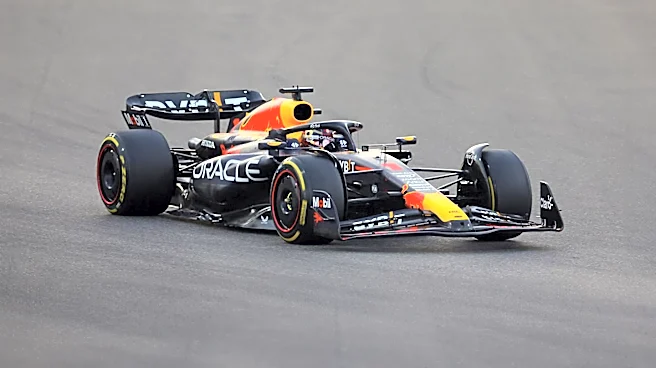
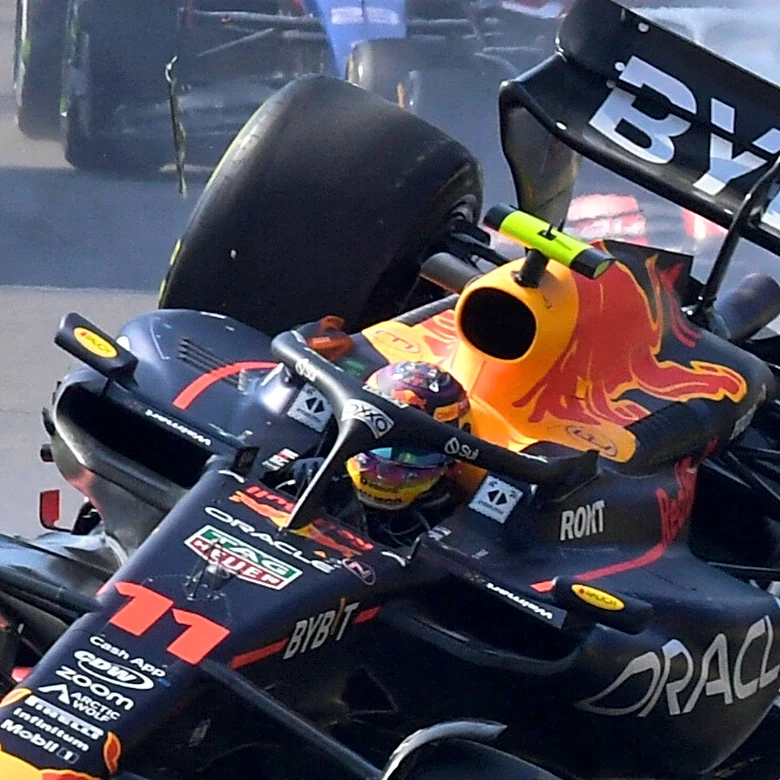
Oracle Red Bull Racing participated in the 'Red Bull Ultimate Winter Race,' an event that saw a Formula 1 car, the RB8, compete against various motorsport vehicles on a frozen lake in Wisconsin. In freezing temperatures of -17°C, Red Bull driver Patrick
Friesacher piloted the F1 car against MotoGP legend Dani Pedrosa, former F1 racer and rallycross champion Scott Speed, snowmobile racer Gunnar Sterne, and Pro 4 truck racing champion Andrew Carlson. The unique contest took place across 107 acres of ice, featuring a specially designed course with different routes and shortcuts to accommodate the diverse strengths of the vehicles. Friesacher secured a close second place, with victory ultimately going to Pedrosa, whose MotoGP bike was fitted with specially crafted spiked wheels. The event, an icy evolution of the original Red Bull Ultimate Race held in Houston in 2024, challenged competitors to adapt to unfamiliar and extremely low-grip conditions.
Why It's Important?
This event showcases the innovative and unconventional marketing strategies employed by brands like Red Bull to engage audiences and highlight the versatility and engineering prowess of their sponsored teams. By taking a Formula 1 car out of its traditional racing environment and placing it in an extreme, low-grip setting, Red Bull generates significant media attention and demonstrates the adaptability of high-performance machinery. For the motorsport world, it provides a unique perspective on how different racing disciplines perform under challenging conditions, fostering cross-sport appreciation and understanding. The 'Ultimate Winter Race' also serves as a testament to the skill of the drivers, who must adapt their techniques to entirely new surfaces and vehicle dynamics. This type of event can inspire new forms of motorsport challenges and push the boundaries of what is considered possible for racing vehicles.
What's Next?
While the 'Ultimate Winter Race' is primarily an exhibition event, its success could lead to similar unconventional motorsport challenges in the future, potentially involving different vehicles or extreme environments. The insights gained from adapting an F1 car for ice racing, such as modifications to tyres and ride height, could inform future engineering considerations for extreme conditions, even if not directly applied to competitive F1 racing. The event also reinforces Red Bull's brand image as a leader in extreme sports and innovative marketing, likely influencing their future promotional activities. The participating drivers and teams will continue their respective competitive seasons, but the experience from this unique race will undoubtedly add to their diverse skill sets and public profiles.
Beyond the Headlines
Beyond the spectacle, the 'Ultimate Winter Race' offers a fascinating study in physics and engineering under extreme conditions. The challenge of generating traction and maintaining control on ice for vehicles designed for high-grip surfaces highlights the fundamental principles of vehicle dynamics. The event also subtly underscores the human element in motorsport, emphasizing the adaptability and skill of drivers who can perform across vastly different disciplines and environments. It challenges conventional notions of what constitutes a 'race track' and expands the imaginative possibilities for motorsport events. Furthermore, the event serves as a powerful marketing tool, not just for Red Bull, but for motorsport in general, attracting new fans and showcasing the excitement and diversity of racing beyond traditional circuits.