
What's Happening?
The Beatles' sole concert in Minnesota, held on August 21, 1965, at Metropolitan Stadium in Bloomington, is being revisited, highlighting the immense fan hysteria and logistical challenges of the era.
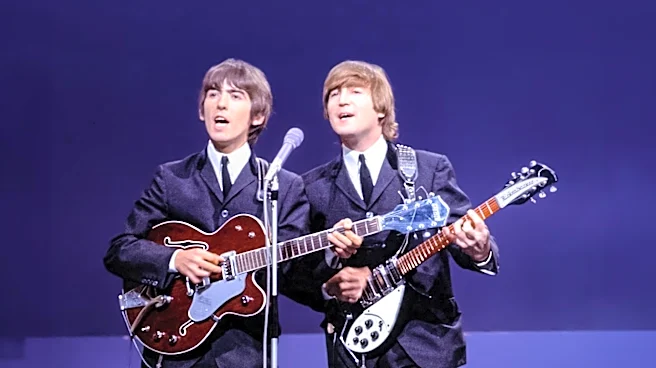
Over 30,000 people were expected, with tickets selling for as low as $2.50. Fans traveled from at least seven U.S. states and Canada, demonstrating the widespread reach of Beatlemania. Preparations for the event included ushers equipped with smelling salts and police armed with 42-inch wooden crowd-control batons. The band's arrival at Minneapolis-St. Paul International Airport saw 3,000 to 4,000 fans overwhelm security, leading to chaotic scenes. Ringo Starr notably described screaming fans as 'idiotic lunatics.' The concert itself lasted just over 30 minutes, with the band performing 11 songs amidst deafening screams. Post-concert, an incident at The Leamington Motor Inn involved police searching rooms reserved for the Beatles' entourage, reportedly flushing out over 10 teenage girls, though no arrests were made.
Why It's Important?
This historical account offers a vivid snapshot of the cultural phenomenon of Beatlemania in the mid-1960s and its profound impact on American society. The event underscores the unprecedented level of celebrity worship and mass hysteria generated by The Beatles, which challenged traditional social norms and public order. The extensive preparations by law enforcement and venue staff, including the use of crowd-control measures, illustrate the unpreparedness of authorities to handle such massive youth gatherings. The incident at the hotel, involving police intervention and accusations regarding the band's entourage, reflects the moral anxieties of the time concerning youth culture and celebrity influence. This event serves as a significant cultural marker, showcasing a pivotal moment in music history where a band transcended entertainment to become a powerful social force, influencing fashion, behavior, and public discourse across the U.S.
What's Next?
While this specific event is a historical retrospective, its retelling contributes to the ongoing cultural legacy of The Beatles. Such historical analyses often lead to renewed interest in the band's music, documentaries, and academic studies of their impact. Future cultural events or anniversaries related to The Beatles' career in the U.S. may draw upon these detailed accounts to illustrate the unique challenges and triumphs of their tours. The narrative also provides context for understanding the evolution of concert security, fan engagement, and celebrity management in the entertainment industry, potentially informing future event planning and public safety strategies for large-scale gatherings.
Beyond the Headlines
The story delves into the deeper societal implications of Beatlemania, revealing a generational divide where adults and authority figures often viewed the band and their fans with skepticism or outright disapproval. The West Concord, Minnesota, school district's warning against 'Beatle haircuts' exemplifies the cultural clash between traditional values and emerging youth trends. The commercialization of The Beatles, from 'Beatle Nut' ice cream to 'Beatle-type boots,' highlights the nascent stages of modern celebrity merchandising and its pervasive influence on consumer culture. The contrasting perceptions of The Beatles – from 'idiotic lunatics' by Starr to 'very nice, polite young men' by a teenage correspondent – underscore the subjective nature of celebrity and the differing experiences of fans and critics. This event serves as a microcosm of the broader cultural shifts occurring in America during the 1960s, where music became a powerful catalyst for social change and generational identity.