





What's Happening?
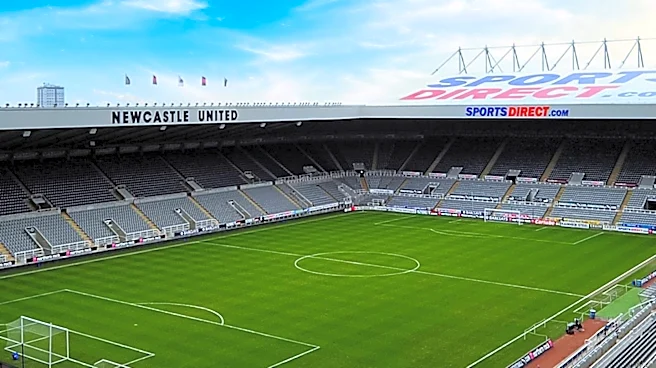
Newcastle United's Public Investment Fund (PIF) ownership is not expected to sell the club for at least another three to five years, according to former Everton chief executive Keith Wyness. Wyness, who now runs a football consultancy, believes that while
the club could eventually be valued at £1.5 billion after the establishment of a new training ground and a planned new stadium, a sale in the near future would not yield sufficient profit for PIF. PIF has reportedly invested approximately £600 million into the club, in addition to the £300 million purchase price, bringing their total investment to around £900 million. Wyness suggests that a sale at the current valuation of £800 million to £1 billion would only allow PIF to recoup their investment, offering limited gain. The club is aiming to have its new training ground ready for the 2029-30 campaign, with a new stadium potentially following soon after.
Why It's Important?
This development highlights the long-term strategic investment approach of the Saudi Arabian Public Investment Fund in global sports assets. For U.S. sports investors and leagues, this case illustrates the significant capital and patience required for successful ownership in top-tier international football. The potential £1.5 billion valuation, contingent on infrastructure development, underscores how non-playing assets like training facilities and stadiums are crucial drivers of club value. This also provides a benchmark for future valuations and investment strategies in the sports industry, particularly for entities looking to attract foreign capital. The financial considerations, such as the £75 million annual interest on a potential £1.5 billion loan for a new stadium, as noted by former Manchester City financial advisor Stefan Borson, reveal the substantial financial risks and long-term commitments involved in such large-scale sports infrastructure projects.
What's Next?
Newcastle United is expected to proceed with its plans for a new training ground, aiming for completion by the 2029-30 campaign, followed by the development of a new stadium. An announcement regarding the new stadium plans is anticipated in the near future. The club's PIF ownership will likely focus on these infrastructure projects to enhance the club's value before considering a sale. The financial implications of these projects, particularly the interest rates on potential loans, will be a critical factor in their long-term strategy. Wyness's projection suggests that any serious consideration of a sale would only occur once these significant investments have matured and the club's valuation has reached the higher end of the projected range, allowing PIF to realize a substantial profit.
Beyond the Headlines
The long-term commitment of PIF to Newcastle United, despite recent uncertainties, reflects a broader trend of sovereign wealth funds investing in high-profile sports entities. This strategy often extends beyond immediate financial returns, encompassing geopolitical influence, brand building, and diversification of national assets. The emphasis on infrastructure, such as training grounds and stadiums, indicates a holistic approach to increasing club value, not just through on-field performance but also through tangible assets that generate revenue and enhance fan experience. This model could influence other global investors, including those in the U.S., to consider similar long-term, infrastructure-heavy investments in sports, recognizing the potential for significant capital appreciation and broader strategic benefits over time.