



What's Happening?
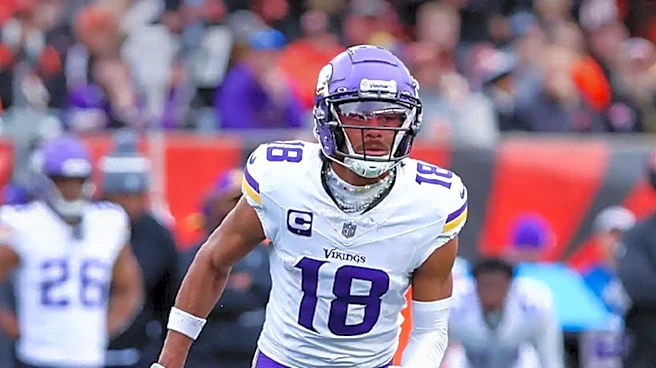
Justin Jefferson, wide receiver for the Minnesota Vikings, has disclosed his reasons for declining a substantial extension offer exceeding $28 million annually from the team in 2023. Jefferson, who was drafted 22nd overall in 2020, had a record-breaking
rookie season and established himself as a premier receiver. He stated that his decision was rooted in self-confidence and a desire for a contract structure that would not disadvantage him in the long run. According to a league source, the Vikings' initial offer included injury guarantees that would only activate when the money was due, potentially allowing the team an exit if Jefferson sustained an injury or no longer fit their plans. This specific contract language was a critical sticking point for Jefferson, who prioritized long-term security over immediate dollar signs. He eventually signed a four-year, $140 million extension in June 2024, making him the highest-paid non-quarterback at the time, with $110 million in total guarantees, including $88.743 million fully guaranteed at signing.
Why It's Important?
This situation highlights the complex dynamics of contract negotiations between elite professional athletes and sports franchises in the U.S. The emphasis on guaranteed money and contract structure, particularly concerning injury clauses, is a significant factor for players in high-impact sports like American football. For the Minnesota Vikings, securing a long-term deal with a star player like Jefferson is crucial for team stability, fan engagement, and competitive performance. For Jefferson, the decision to 'bet on himself' by rejecting an early offer and waiting for a more favorable deal demonstrates the increasing leverage top-tier athletes hold, especially after proving their value on the field. This trend can influence future contract negotiations across the NFL, potentially leading to more player-friendly terms regarding guarantees and overall contract security. The outcome also underscores the financial risks and rewards involved for both players and teams in these high-stakes negotiations.
What's Next?
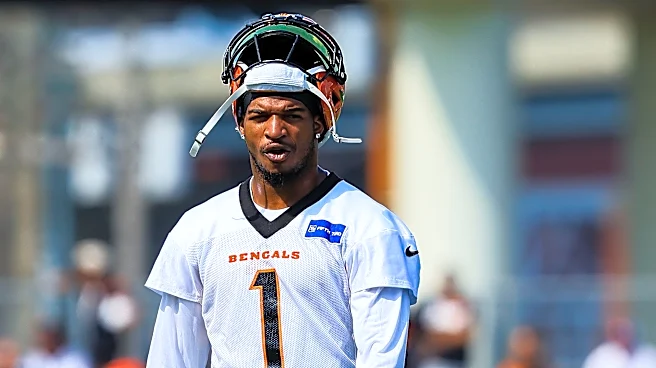
With his contract situation resolved, Justin Jefferson is now focused on his on-field performance and re-establishing his position as the top wide receiver in the NFL. He has publicly stated his intention to prove his dominance after the 2025 season. The Vikings will benefit from having their star receiver locked in for the foreseeable future, providing stability to their offensive scheme. The debate over who is the best wide receiver in the NFL, particularly between Jefferson and his former LSU teammate Ja'Marr Chase of the Cincinnati Bengals, is expected to intensify. Both players continue to compete for statistical supremacy and individual accolades. The long-term impact of Jefferson's contract on the market for other elite non-quarterback players will be closely watched, as it sets a new benchmark for guaranteed money and annual salary in the league.
Beyond the Headlines
The narrative surrounding Justin Jefferson's contract negotiation extends beyond mere financial figures, touching upon themes of self-belief, strategic career management, and the evolving power balance between professional athletes and team ownership. His decision to prioritize the 'right language' in his contract over an immediate large sum reflects a sophisticated understanding of long-term financial and career security, especially in a sport with inherent injury risks. This approach could inspire other athletes to scrutinize contract details more closely, potentially leading to a broader shift in how player contracts are structured across professional sports. Furthermore, the competitive dynamic between Jefferson and Ja'Marr Chase, rooted in their shared LSU history, adds a compelling human element to their professional rivalry, driving both players to achieve peak performance and contributing to the overall excitement and narrative of the NFL.