




What's Happening?
Brad Keselowski, co-owner and driver for RFK Racing, has raised concerns about Toyota's dominance in the NASCAR Cup Series. He attributes this to Toyota's strategic alliances with two top-tier teams, 23XI Racing and Joe Gibbs Racing (JGR), which he believes
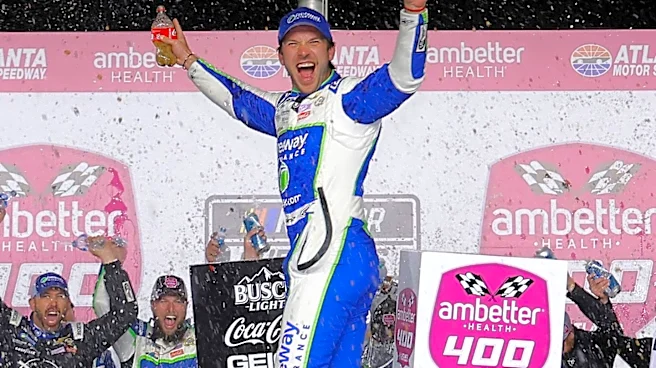
has shifted the competitive balance. Denny Hamlin, a driver for JGR and co-owner of 23XI Racing, disagrees with Keselowski's assessment. Hamlin argues that the technical alliance with JGR was a strategic decision by 23XI Racing to accelerate their competitiveness. This alliance involves 23XI Racing paying JGR $8 million annually for technical support, which Hamlin believes is a sound business decision. The collaboration has resulted in 11 wins out of 18 races this season for 23XI Racing and JGR drivers, with Tyler Reddick leading the season with five victories.
Why It's Important?
The debate over Toyota's influence in NASCAR highlights the broader implications of manufacturer alliances in the sport. Keselowski's comments suggest that the current structure may favor manufacturers with multiple top-tier teams, potentially disadvantaging others. This situation could lead to calls for regulatory changes to ensure a more level playing field. The success of 23XI Racing and JGR underlines the importance of strategic partnerships and resource sharing in achieving competitive success. The outcome of this debate could impact team strategies, manufacturer relationships, and the overall competitive landscape of NASCAR.
What's Next?
As the season progresses, it will be crucial to observe how other manufacturers and teams respond to Toyota's dominance. There may be increased pressure on NASCAR to review its regulations regarding manufacturer alliances and technical collaborations. Teams like RFK Racing might seek similar alliances to enhance their competitiveness. The ongoing performance of 23XI Racing and JGR will be closely watched, as will any potential regulatory changes that could arise from this debate.