








What's Happening?
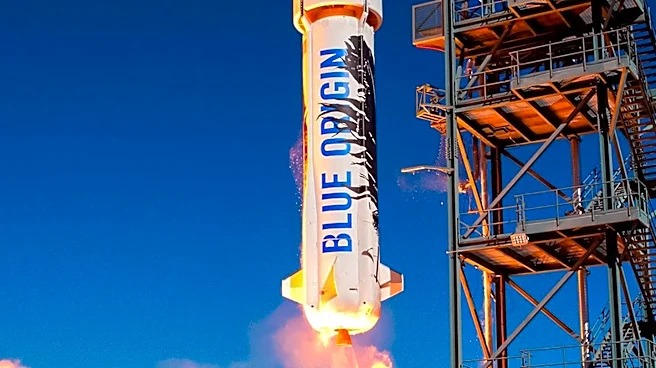
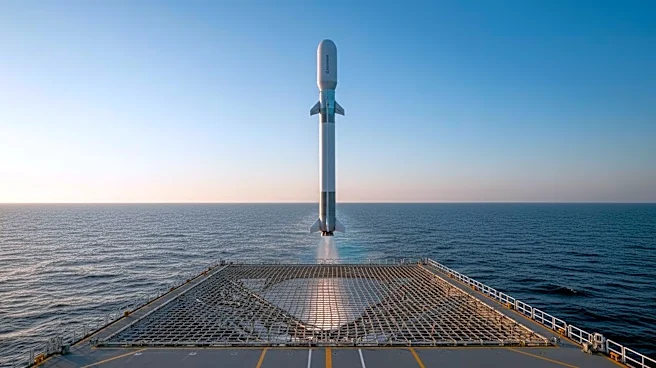
Blue Origin, the aerospace company founded by Amazon's Jeff Bezos, is seeking to raise $10 billion from outside investors to support its development of rocket engines, reusable launch vehicles, lunar landers, and satellite systems. This marks the first
time Blue Origin is looking for external funding, having previously been financed by Bezos himself, who sold $1 billion of Amazon stock annually to fund the company. The investment round is reportedly led by Coatue Management, a global investment firm, and is expected to value Blue Origin at $130 billion. Blue Origin CEO Dave Limp confirmed the investment plans in a memo to employees, highlighting the confidence in the company's mission and strategy.
Why It's Important?
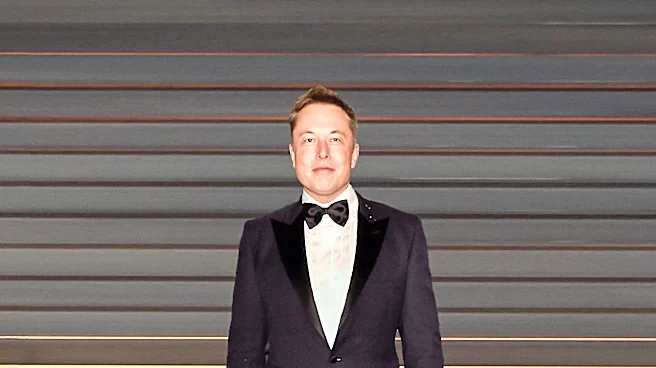
The move to seek external funding is significant as it indicates Blue Origin's ambition to expand its operations and compete more aggressively in the aerospace industry, particularly against SpaceX, owned by Elon Musk. The infusion of $10 billion would provide Blue Origin with substantial resources to accelerate its projects and potentially secure more government and commercial contracts. This development could also influence the competitive dynamics of the private space sector, where companies are racing to innovate and capture market share in satellite launches, space tourism, and lunar exploration. Investors' confidence in Blue Origin's potential could lead to increased interest and investment in the broader aerospace industry.
What's Next?
As Blue Origin moves forward with its funding plans, the company is likely to focus on scaling its operations and enhancing its technological capabilities. The successful acquisition of $10 billion in funding could lead to accelerated timelines for its projects, including the development of new launch vehicles and lunar landers. Additionally, Blue Origin may seek to expand its partnerships with government agencies and private companies to secure more contracts and collaborations. The outcome of this funding round could also impact the strategic decisions of other aerospace companies, prompting them to seek additional investments or partnerships to remain competitive.