








What's Happening?
The Entertainment Software Association (ESA) has formally recommended that Anbernic, a China-based retro console manufacturer, be added to the U.S. government's Notorious Market List. This annual report, published by the Office of the United States Trade
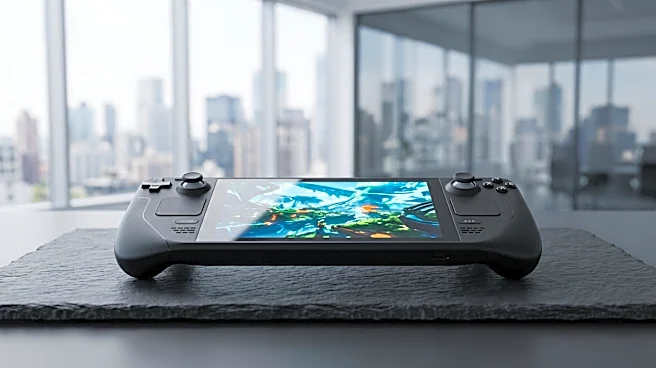
Representative (USTR), identifies markets that reportedly engage in or facilitate significant trademark counterfeiting or copyright piracy. Anbernic manufactures handheld devices that emulate various retro gaming systems, including those from Nintendo, PlayStation, and Sega. The ESA alleges that Anbernic normalizes hardware-based piracy by distributing illicit game catalogs through a polished consumer product. These devices are often sold with removable memory cards preloaded with hundreds or thousands of unauthorized copies of copyright-protected video games from ESA members. The ESA claims these preloaded games enable immediate play without a lawful purchase or license and circumvent technological protection measures designed to control access and copying. Last year, Anbernic had suspended shipments to the U.S. following the implementation of tariffs.
Why It's Important?
The inclusion of Anbernic on the Notorious Market List could have significant implications for the retro gaming market and intellectual property rights in the U.S. The ESA argues that these 'illicit plug-and-play consoles' are the functional equivalent of 'superfakes,' diverting sales from authorized games, compilations, subscriptions, remasters, and licensed retro hardware. By offering vast embedded game catalogs as a key selling point, Anbernic's business model allows piracy to scale as an ordinary consumer purchase, impacting the revenue streams of legitimate game publishers and developers. Furthermore, the ESA highlights potential security, privacy, and financial risks associated with these devices, as well as their ability to bypass player and child-safety protections. This action underscores the ongoing challenge of combating digital piracy and protecting intellectual property in a rapidly evolving technological landscape, potentially setting a precedent for how similar retro gaming emulation devices are treated in the future.
What's Next?
The USTR will review the ESA's recommendation and decide whether to include Anbernic on its upcoming Notorious Market List. If Anbernic is added, it could lead to increased scrutiny, potential trade restrictions, and further enforcement actions against the company and its distributors in the U.S. The ESA has also proposed broader measures for governments and market operators to address piracy, including targeting 'cracked game sources, repackers, and linking sites,' 'torrent and piracy-coordination markets,' 'unauthorized digital goods marketplaces,' and 'commercial cheat markets.' This suggests a continued push by the entertainment software industry to combat various forms of digital piracy. The outcome for Anbernic could influence how other retro console manufacturers operate and distribute their products in the U.S. market, potentially leading to a reevaluation of business practices to ensure compliance with intellectual property laws.
Beyond the Headlines
This situation highlights the complex legal and ethical considerations surrounding retro gaming emulation. While many enthusiasts view emulation as a way to preserve gaming history and access titles no longer commercially available, the preloading and sale of copyrighted games without licenses directly infringes on intellectual property rights. The ESA's stance emphasizes the economic impact on rights holders, who invest significant resources in developing and publishing games. The debate also touches upon the accessibility of older games; as physical media degrades and older consoles become obsolete, legal avenues for playing classic titles can be limited. This case could reignite discussions about digital preservation, licensing models for retro games, and the balance between consumer access and intellectual property protection in the digital age. It also raises questions about the responsibility of online marketplaces and social media platforms in facilitating the sale of potentially infringing devices.