





What's Happening?
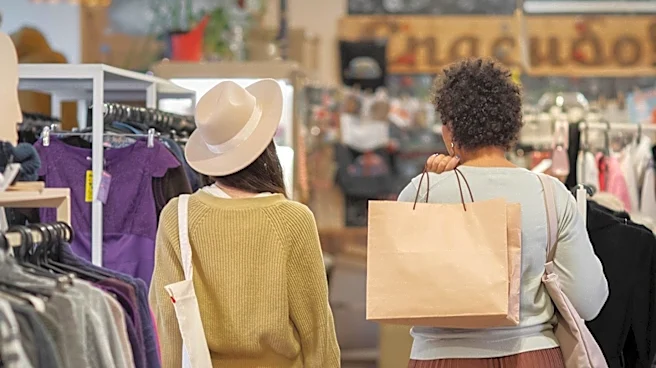
Thrifting, along with resale platforms, clothing swaps, and refurbished electronics, is experiencing a surge in popularity, particularly among millennials and Gen Z consumers. This trend is fueled by a shift towards more sustainable and intentional shopping
habits, emphasizing conscious consumption. Consumers are increasingly prioritizing better-quality secondhand fashion and furniture over mass-produced items. This movement is evident in various U.S. locations, including Queens, New York, where numerous hidden thrift shops are highlighted as popular destinations for finding affordable and unique items. The appeal extends to diverse categories such as clothing, housewares, furniture, and vintage collectibles, with shoppers actively seeking out special gifts and one-of-a-kind treasures.
Why It's Important?
The growing preference for thrifting among younger generations signifies a significant shift in consumer behavior, impacting the U.S. retail landscape. This trend challenges traditional fast fashion models and promotes a circular economy, potentially reducing waste and encouraging product longevity. For businesses, it highlights the increasing importance of sustainability and ethical practices in attracting and retaining customers. The rise of resale platforms and the demand for secondhand goods also create new market opportunities for businesses specializing in vintage items, consignment, and refurbishment. This conscious consumption movement could lead to a re-evaluation of production methods and supply chains across various industries, as brands adapt to consumer demands for more environmentally friendly and socially responsible options.
What's Next?
The continued growth of thrifting and conscious consumption is likely to further integrate sustainable practices into mainstream retail. We can anticipate an expansion of resale markets, both online and physical, and an increased focus on product durability and repairability from manufacturers. Retailers may explore partnerships with consignment shops or develop their own take-back programs to cater to this demand. Additionally, the holiday shopping season is expected to see a rise in thrifted gifts, as consumers seek more personal and sustainable options. This trend could also influence design and manufacturing, with a greater emphasis on timeless pieces and quality materials that hold their value over time, rather than disposable, trend-driven items.
Beyond the Headlines
Beyond its economic implications, the thrifting trend reflects a broader cultural shift towards valuing authenticity, individuality, and environmental responsibility. It encourages a more creative and resourceful approach to consumption, where items are chosen for their unique character and story rather than just their newness. This movement also fosters community engagement through local thrift shops and clothing swaps, creating spaces for connection and shared values. The act of 'foraging' for treasures in secondhand stores can be seen as a form of mindful consumption, promoting patience and discovery in an era of instant gratification. This shift could lead to a redefinition of luxury, where vintage and pre-owned items gain prestige for their quality, history, and sustainable credentials.