


What's Happening?
Olivia Rodrigo's recent Christmas single, "Take Me Home (4 Christmas)," has reignited discussions surrounding plagiarism and music copyright law. Upon its release, the song drew comparisons to The Waitresses' 1981 track, "Christmas Wrapping," due to similar
new-wave sounds and a talk-singing narrative style. However, these plagiarism allegations have been largely dismissed as baseless, especially since Waitresses songwriter Christopher Butler confirmed that Rodrigo had contacted him prior to the song's release to express her admiration for the band and invite them to a listening session. Rodrigo also faced accusations regarding similarities to Robbie Williams' "Candy," which Williams himself dismissed, stating the natural occurrence of similar musical compositions given the finite number of notes and chords. This situation highlights a recurring debate in the music industry about the line between inspiration and copyright infringement, a discussion that has been particularly sensitive since the "Blurred Lines" lawsuit involving Marvin Gaye's estate, which set a precedent for copyright claims based on a shared 'vibe' rather than direct melodic or lyrical theft.
Why It's Important?
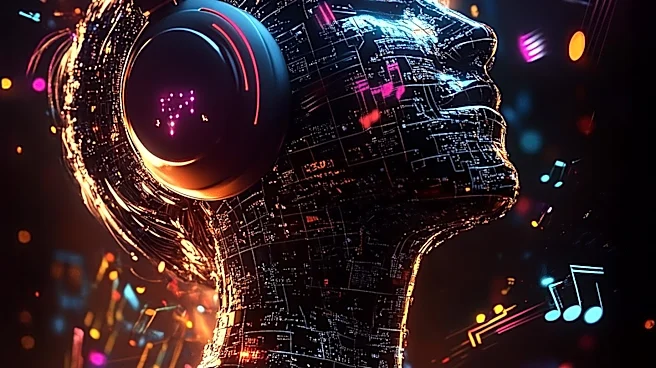
The renewed debate surrounding Olivia Rodrigo's song underscores a critical tension within the music industry: how to balance artistic inspiration with copyright protection. While the immediate focus has been on Rodrigo, the broader implication is a shift in attention towards the more significant threat posed by artificial intelligence (AI) in music. The industry is grappling with AI's ability to generate music by analyzing vast databases of existing works, raising complex questions about originality, ownership, and fair use. The ongoing lawsuits against AI music companies, such as Suno, for allegedly imitating artists' voices and styles without permission, highlight the legal and ethical quagmire. These cases will likely shape the future landscape of music creation, intellectual property rights, and the economic viability of human artists, determining whether AI becomes a tool for enhancement or a force for displacement within the creative sector.
What's Next?
The music industry is bracing for significant changes as AI technology continues to advance. Spotify is reportedly planning to introduce a service in early 2027 that will allow users to create AI remixes and covers of songs, pending licensing negotiations with artists and labels. The outcomes of current lawsuits against AI music companies, such as the one brought by musicians including Jason Isbell against Suno, will be crucial in defining the legal boundaries for AI-generated music. These rulings will determine whether AI can copyright its own creations, the extent to which artists can control the use of their voice and likeness by AI, and whether artists will be compelled to adapt to AI integration. The industry will need to establish new frameworks for compensation, attribution, and intellectual property in an era where machines can mimic and generate music, potentially leading to a redefinition of what constitutes 'original' artistic work.
Beyond the Headlines
Beyond the immediate legal battles and technological advancements, the rise of AI in music presents profound ethical and cultural implications. The debate over Olivia Rodrigo's song, while seemingly about plagiarism, serves as a precursor to a larger existential question for the arts: what is the value of human creativity when machines can replicate and generate art? The increasing prevalence of AI-generated music on platforms like TikTok, where songs are often decontextualized into viral sound bites, further complicates the notion of artistic integrity and originality. This shift could lead to a devaluation of human artistry, as the market becomes saturated with AI-produced content. The long-term impact could include a re-evaluation of copyright law to address the unique challenges posed by AI, potentially leading to new models of artist compensation and protection, or conversely, a more litigious and complex environment for creators.