


What's Happening?
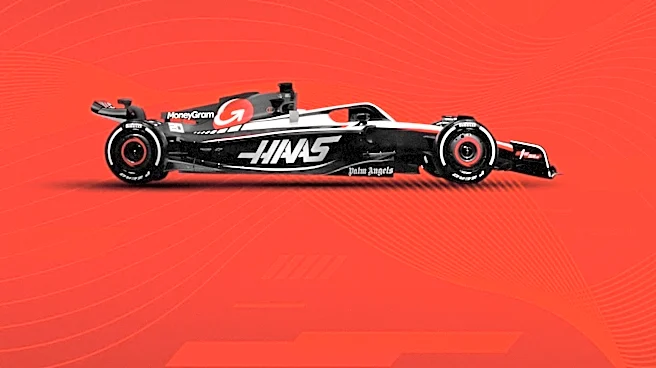
Haas F1 Team has allocated its sole latest-spec Ferrari power unit upgrade for the Monza race to Oliver Bearman, leaving Esteban Ocon to race with an older engine. Ferrari's second ADUO upgrade was made available to its customer teams, but Haas initially
received only one unit. Team Principal Ayao Komatsu explained that this decision was made to balance previous technical priorities, as Ocon had received brake and power-steering developments earlier in the season. Ocon expressed disappointment, acknowledging that racing with the old engine would be a significant disadvantage, especially at Monza where power is crucial. Bearman ended FP2 in P8, while Ocon was ten places behind, highlighting the performance difference.
Why It's Important?
This decision by Haas F1 Team has significant implications for team dynamics, driver performance, and the competitive landscape of Formula 1. Prioritizing one driver over another for a crucial upgrade can create internal tensions and affect morale, especially for a driver like Ocon whose 2027 seat is reportedly under scrutiny. In a sport where marginal gains are critical, racing with an older power unit at a high-speed track like Monza can severely impact a driver's ability to compete, potentially influencing championship standings or future contract negotiations. For Haas, the strategic choice reflects a calculated risk to maximize the performance of one car, possibly to evaluate Bearman's potential or to secure better results in a specific race. This scenario also underscores the challenges faced by customer teams in F1, who are dependent on their engine suppliers for upgrades and may not always receive equal allocations, impacting their overall competitiveness against factory teams.
What's Next?
The immediate consequence will be observed in the Monza race results, where Ocon's performance with the older engine will be closely watched. His ability to mitigate the power deficit will be crucial for his standing within the team and his future in Formula 1. The decision could also influence team strategy in subsequent races, particularly if similar upgrade allocation dilemmas arise. Komatsu's justification of balancing previous upgrades suggests a long-term approach to driver development and resource distribution within Haas. However, the public and media reaction to Ocon's disadvantage may put pressure on the team to ensure more equitable treatment in the future, or at least clearer communication regarding such decisions. The performance disparity between Bearman and Ocon at Monza will likely be a key talking point, potentially affecting their respective career trajectories and the team's overall competitive strategy for the remainder of the season.
Beyond the Headlines
This incident sheds light on the complex interplay of technical limitations, strategic decision-making, and driver politics within Formula 1. Beyond the immediate race performance, the choice to favor one driver for an upgrade can have deeper psychological impacts on team cohesion and individual motivation. It raises questions about the fairness of resource allocation in a sport that demands peak performance from both drivers. Such decisions can inadvertently create a 'pecking order' within a team, influencing how drivers are perceived by management, sponsors, and potential future employers. Furthermore, it highlights the inherent power dynamics between engine suppliers and customer teams, where the latter's access to cutting-edge technology can be limited. This situation could spark broader discussions within F1 about equitable distribution of resources and the potential for such practices to impact the competitive balance of the sport, especially as teams vie for every possible advantage.