







What's Happening?
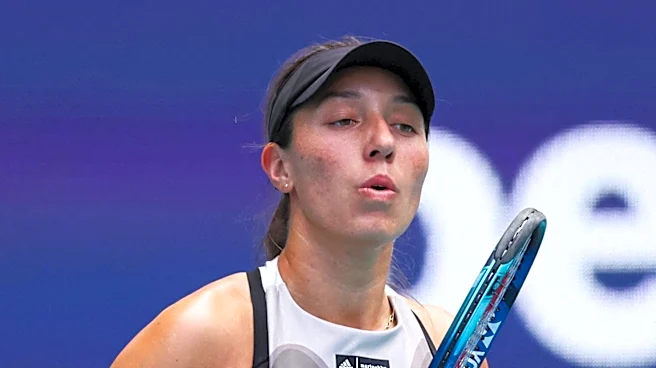
The Women's Tennis Association (WTA) has issued an apology after admitting it failed to inform players that their on-court conversations during practice sessions at the WTA Finals were being broadcast. This controversy arose in Indian Wells when Jessica
Pegula was heard on the WTA’s YouTube livestream making critical remarks about Mirra Andreeva and her coach, Conchita Martínez. Pegula was heard calling Andreeva a 'diva' and expressing a loss of respect for Martínez. Another incident involved world No. 1 Elena Rybakina having an apparent disagreement with her coach during a practice session. The WTA stated that the microphones were intended to capture ambient sounds for livestreaming but acknowledged its failure to ensure appropriate safeguards and inform players. The WTA Finals, featuring the year’s top eight singles players and doubles teams, are set to begin.
Why It's Important?
This incident raises significant concerns about player privacy and the ethical responsibilities of sports organizations in broadcasting behind-the-scenes content. The lack of transparency from the WTA regarding active microphones during practice sessions constitutes a breach of trust with its athletes. Such unauthorized broadcasting of private conversations can create tension among players, coaches, and teams, potentially impacting team dynamics and individual performance. It also highlights a broader issue within professional sports regarding the balance between fan engagement through increased access and the need to protect athletes' personal and professional boundaries. The WTA's apology and subsequent decision to continue livestreaming practice sessions without audio indicate a recognition of these concerns, but the incident may lead to increased scrutiny of how sports bodies manage player information and privacy.
What's Next?
Following the apology, the WTA has announced that it will continue to livestream practice sessions but without audio, aiming to prevent similar privacy breaches. This immediate change is a direct response to the controversy and an attempt to restore player trust. However, the incident may prompt players and their representatives to demand clearer policies and agreements regarding media access and privacy during tournaments. There could be discussions about implementing more robust consent protocols for any form of broadcasting involving athletes' private moments. This event might also influence other sports organizations to review their own practices concerning behind-the-scenes content, potentially leading to industry-wide changes in how player privacy is managed in the age of pervasive digital media.
Beyond the Headlines
The 'hot mic' incident at the WTA Finals underscores a growing tension between the desire for increased fan access and the fundamental right to privacy for public figures. In an era where sports organizations are constantly seeking new ways to engage audiences, the line between public performance and private moments can become blurred. This event could spark a broader conversation about the psychological impact of constant surveillance on athletes, who are already under immense pressure. It also highlights the ethical dilemmas faced by media platforms and sports bodies in curating content, particularly when it involves potentially sensitive or unfiltered interactions. The incident serves as a cautionary tale about the importance of clear communication, consent, and respect for personal boundaries, even in highly public professional environments.