







What's Happening?
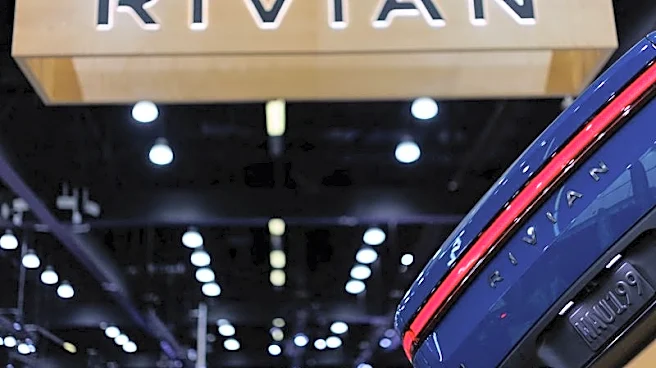
Electric vehicle manufacturers Rivian Automotive and Lucid Group have reported their second-quarter delivery results, revealing contrasting outcomes. Rivian has raised its 2026 delivery forecast, now expecting to deliver between 65,000 and 70,000 vehicles,
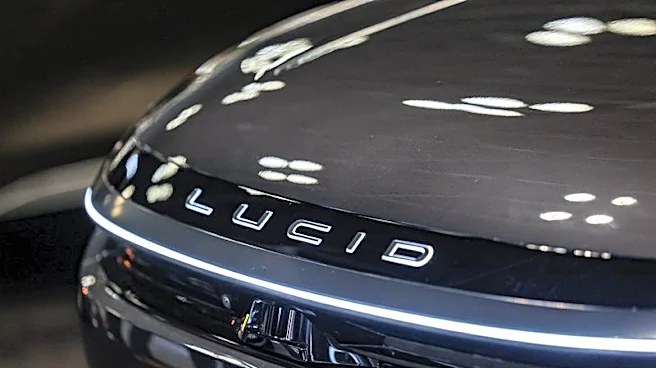
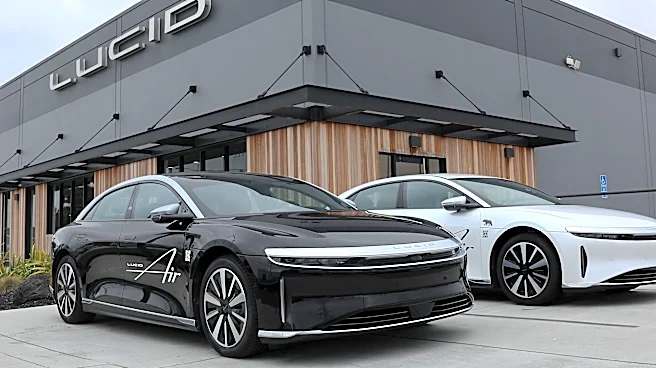
up from a previous estimate of 62,000 to 67,000 units. This adjustment follows stronger-than-expected demand for its electric vehicles, with Rivian producing 12,613 vehicles and delivering 12,194 units in the second quarter, surpassing analyst expectations. In contrast, Lucid Group fell short of Wall Street expectations, delivering 3,953 vehicles against a forecast of 5,000 units. Lucid's new CEO, Silvio Napoli, announced a leadership shake-up in response to the disappointing results.
Why It's Important?
Rivian's increased delivery outlook reflects robust demand for electric vehicles, highlighting the company's growing market presence and production capabilities. This positive development is likely to boost investor confidence and support Rivian's stock performance. Conversely, Lucid's failure to meet delivery expectations underscores the challenges faced by new entrants in the competitive electric vehicle market. The leadership changes at Lucid indicate a strategic shift aimed at addressing operational inefficiencies and improving future performance. The contrasting results of these two companies illustrate the dynamic nature of the electric vehicle industry, where production capacity and market demand are critical to success.
What's Next?
Rivian is set to report its second-quarter financial results on July 30, which will provide further insights into its financial health and operational strategy. The company is also ramping up production of its R2 SUV at its Illinois plant, which could further enhance its market position. For Lucid, the leadership changes may lead to strategic adjustments aimed at improving production efficiency and meeting market expectations. Both companies will continue to navigate the challenges of scaling production and meeting consumer demand in a rapidly evolving industry.