






What's Happening?
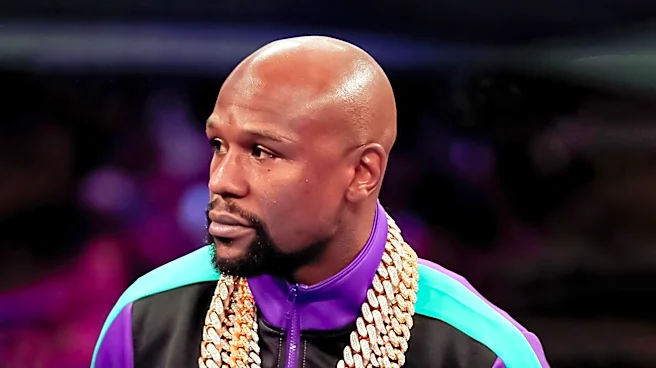
On September 7, 2013, American boxer Floyd Mayweather Jr. faced Canelo Alvarez in a highly anticipated fight in Las Vegas. Mayweather, who was undefeated at the time, won the match by unanimous decision after twelve rounds. The event was particularly
notable for the substantial purse Mayweather received, approximately $41 million, making it one of the largest payouts ever for an athlete in a single fight. This victory further solidified Mayweather's status as one of the highest-paid athletes in global sports during that era, preceding even larger earnings from his subsequent fights against Conor McGregor. The fight underscored the significant financial scale of top-tier boxing events and the immense earning potential for elite athletes in the sport.
Why It's Important?
This event is important as it highlights the significant economic impact and financial scale of major boxing events in the U.S. The $41 million purse earned by Floyd Mayweather Jr. for a single fight set a benchmark for athlete compensation in combat sports, influencing future negotiations and the financial structure of high-profile boxing matches. Such large payouts attract considerable investment in the sports industry, from promoters and broadcasters to advertisers, driving revenue streams and creating jobs. It also reinforces Las Vegas's role as a premier destination for major sporting events, drawing tourism and generating local economic activity. The financial success of this fight demonstrated the enduring appeal of boxing as a major entertainment spectacle, capable of generating massive revenue and elevating athletes to global superstar status with commensurate financial rewards.
What's Next?
While this event occurred in 2013, its legacy continues to influence the boxing world. The financial precedents set by fights like Mayweather vs. Alvarez have shaped expectations for future mega-fights, with athletes and their teams aiming for similar or even larger purses. This trend suggests a continued focus on high-stakes, high-reward matchups in boxing, potentially leading to more pay-per-view events and increased media rights valuations. Promoters will likely continue to seek out compelling narratives and undefeated records to maximize financial returns, ensuring that the economic model established by such historic bouts remains a driving force in the sport. The emphasis on financial incentives will also likely continue to attract top talent to boxing, maintaining its competitive and commercial viability.
Beyond the Headlines
The substantial earnings from this fight also shed light on the broader commercialization of sports and the evolving landscape of athlete endorsements and personal branding. Mayweather's ability to command such a high purse reflects not only his athletic prowess but also his marketing savvy and ability to generate significant public interest. This phenomenon extends beyond boxing, influencing how athletes across various sports leverage their fame for financial gain. It also raises questions about the distribution of wealth within professional sports, with a significant portion concentrated at the very top. Furthermore, the event contributes to the cultural narrative of Las Vegas as a hub for high-stakes entertainment, where sports, celebrity, and immense wealth converge, shaping its identity as a global entertainment capital.