
What's Happening?
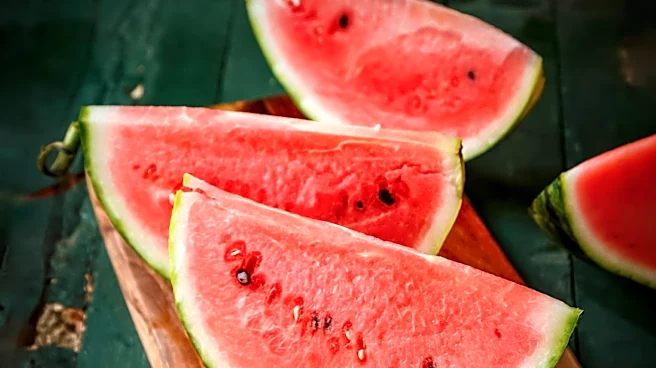
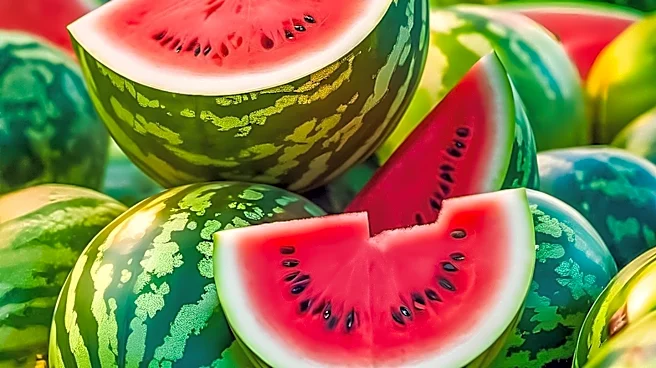
A new method for identifying the sweetest watermelons is gaining traction, offering an alternative to traditional techniques like tapping the rind. This approach focuses on examining the dried brown mark
at the watermelon's 'rear end,' which is the remnant of the female flower that birthed the fruit. The size and appearance of this mark are key indicators of ripeness and sweetness. A smaller, more dried-out, and 'clenched' circular mark suggests that the watermelon spent more time ripening on the vine, allowing it to develop higher sugar content. Conversely, a larger mark indicates the fruit was likely harvested prematurely. Unlike some other fruits, watermelons do not continue to ripen once picked, making this pre-purchase assessment crucial for consumers seeking optimal sweetness. This method is being shared widely on social media, providing a simpler and more effective way for shoppers to select ripe watermelons.
Why It's Important?
This new method for selecting watermelons is important for consumers and the produce industry alike. For consumers, it offers a more reliable way to ensure they are purchasing sweet, ripe fruit, reducing the disappointment of buying an underripe watermelon. This can enhance the overall enjoyment of the product and potentially increase consumer satisfaction with fresh produce. For the produce industry, particularly retailers and farmers' markets, widespread adoption of this technique could lead to more informed purchasing decisions by consumers, potentially reducing waste from discarded underripe fruit. It also highlights the impact of social media in disseminating practical consumer tips, influencing purchasing habits and product selection criteria. The emphasis on the fruit's time on the vine underscores the importance of proper harvesting practices in delivering quality produce to the market.
What's Next?
As this watermelon selection method continues to spread, particularly through social media, it is likely to become a more common practice among shoppers. Consumers may increasingly rely on this visual cue when purchasing watermelons, potentially shifting demand towards fruits exhibiting the desired 'small, clenched mark.' Retailers and farmers may need to adapt by educating their staff on this method or by ensuring their watermelons are harvested at optimal ripeness to meet evolving consumer expectations. The success of this tip could also inspire similar 'hacks' for selecting other fruits and vegetables, further empowering consumers with practical knowledge for produce selection. Additionally, agricultural researchers might explore the scientific basis behind this observation to further validate and refine such indicators of fruit quality.
Beyond the Headlines
The popularity of this watermelon selection method reflects a broader trend of consumers seeking practical, accessible knowledge to make informed purchasing decisions, especially regarding fresh food. It highlights a growing desire for transparency and quality in the food supply chain, where consumers are less willing to leave ripeness to chance. This phenomenon also underscores the power of collective knowledge sharing, often amplified by social media, to influence everyday consumer behavior. Ethically, it encourages more mindful consumption and potentially reduces food waste by helping consumers choose produce that meets their expectations. Culturally, it taps into a long-standing tradition of seeking 'tricks of the trade' for everyday tasks, now modernized through digital platforms, fostering a sense of community around shared practical wisdom.