





What's Happening?
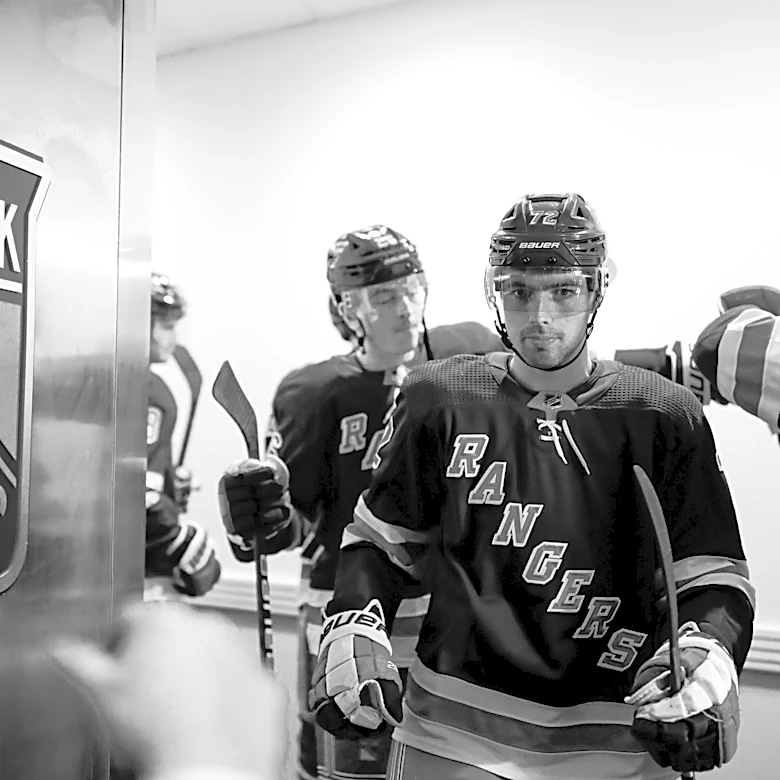
The New York Rangers are currently leading the National Hockey League (NHL) with an 89.71% penalty kill rate, a significant improvement from their 15th-place finish last season at 79.92%. This success is attributed to strategic adjustments made by head
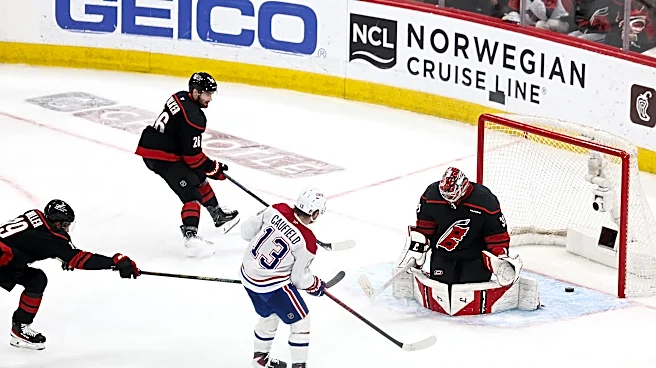
coach Mike Sullivan, particularly in supporting the goaltending duo of Dylan Garand and Joonas Korpisalo in the absence of star goalie Igor Shesterkin. The team has recorded 15 perfect penalty kills this season, tying for the most in the NHL. Their defensive prowess was recently highlighted in a game against the Montreal Canadiens, where they successfully killed off all four power plays, including a 6-on-4 opportunity. Furthermore, the Rangers have demonstrated an offensive threat while shorthanded, tying for the most shorthanded goals in the league with four, including a recent goal by Will Cuylle against the Canadiens.
Why It's Important?
The New York Rangers' exceptional penalty kill performance is a critical factor in their current success, positioning them strongly within the Metropolitan Division and Eastern Conference playoff picture. This improvement indicates effective coaching strategies and player execution, which are essential for sustained competitiveness in the NHL. A strong penalty kill unit not only prevents opponents from scoring but also conserves energy and maintains momentum, which can be crucial in tight games. The added dimension of offensive production while shorthanded forces opposing teams to be more cautious on the power play, potentially disrupting their offensive flow and creating scoring opportunities for the Rangers. This specialized unit's success could be a blueprint for other teams looking to improve their special teams and overall defensive play, impacting league-wide strategies.
What's Next?
The Rangers, currently on a three-game winning streak and having won six of their last seven games, are preparing for a significant test against the defending Stanley Cup champion Carolina Hurricanes. They will face the Hurricanes twice in eight days at Madison Square Garden, with additional games against struggling teams like the Buffalo Sabres, Chicago Blackhawks, and Calgary Flames in between. Maintaining their elite penalty kill performance will be crucial in these upcoming matchups, especially against strong offensive teams like the Hurricanes. The team will aim to continue their strong defensive play and capitalize on shorthanded opportunities to solidify their playoff position as the season progresses. The effectiveness of their special teams, particularly the penalty kill, will be a key determinant in their ability to finish the month strong and maintain their standing in the league.
Beyond the Headlines
The dramatic improvement in the Rangers' penalty kill unit highlights the profound impact of coaching adjustments and player adaptation in professional sports. Head coach Mike Sullivan's ability to devise a system that not only compensates for key player absences but also transforms a previously average unit into the league's best underscores the strategic depth required in hockey. This success also points to the evolving nature of special teams play in the NHL, where a strong penalty kill can be as much an offensive weapon as a defensive one. The emphasis on two-way forwards like Mika Zibanejad, J.T. Miller, and Will Cuylle, who contribute to both power play and penalty kill units, reflects a broader trend in player development towards versatility and comprehensive skill sets. This strategic shift could influence how teams scout, draft, and develop players, prioritizing those who can excel in multiple facets of the game.