







What's Happening?
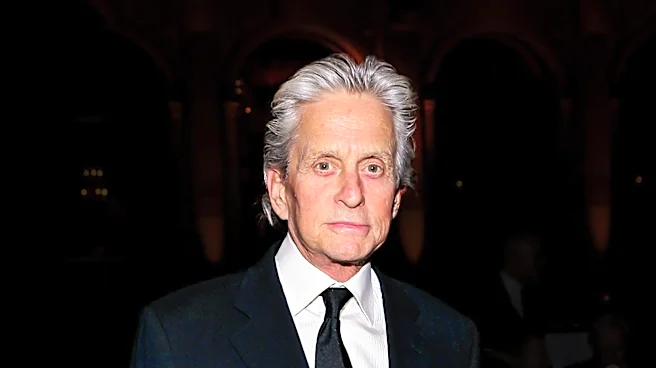
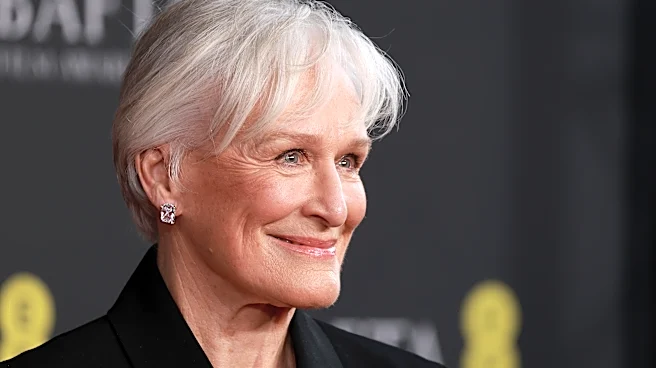
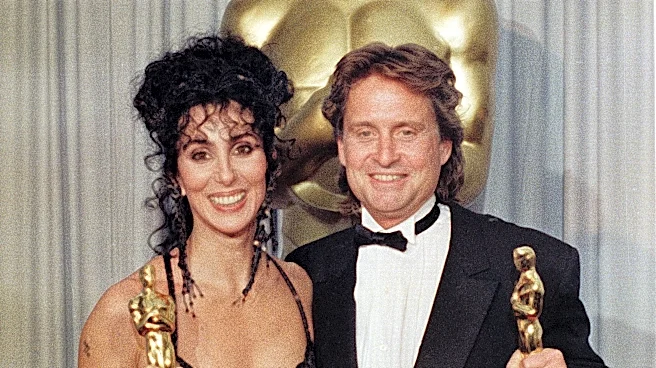
Veteran actor Michael Douglas has publicly stated that Glenn Close, his co-star in the 1987 film 'Fatal Attraction,' should have won the Best Actress Oscar in 1988 instead of Cher, who won for 'Moonstruck.' Douglas made these comments during an appearance
on 'The Graham Norton Show' in the U.K., where he was joined by Close, Kieran Culkin, and Naomi Ackie. The conversation arose as Close discussed her history of Oscar nominations without a win, joking that her upcoming honorary Academy Award was due to members feeling guilty. Douglas interjected, asserting that Close's performance in 'Fatal Attraction' was one of 'the greatest performances of all time' and that she deserved the award that year. Cher's representative responded to Douglas's comments with a four-word statement to Page Six: 'Cher adores Michael Douglas,' indicating no hard feelings. The 1988 Best Actress race, which also included Holly Hunter, Sally Kirkland, and Meryl Streep, has long been a subject of debate among film enthusiasts.
Why It's Important?
This re-ignition of a nearly 40-year-old Oscar debate by a prominent figure like Michael Douglas highlights the enduring impact of Academy Award decisions and the subjective nature of artistic recognition. It underscores how certain performances and perceived snubs can remain topics of discussion for decades, influencing public perception of actors' careers and film legacies. For Glenn Close, Douglas's public support could be seen as a validation of her critically acclaimed work, particularly as she is set to receive an honorary Oscar. For Cher, the comments, while potentially controversial, have been met with grace, reinforcing her public image. The debate also draws attention to the cultural significance of 'Fatal Attraction' and 'Moonstruck,' two films that represent different facets of 1980s cinema and continue to be analyzed for their artistic merit and cultural impact. Such discussions contribute to the ongoing critical discourse surrounding film history and the criteria for cinematic excellence.
What's Next?
While Michael Douglas's comments have stirred renewed discussion, it is unlikely to lead to any formal re-evaluation of the 1988 Oscar results, as Academy decisions are final. However, the remarks may prompt a fresh wave of critical analysis and public commentary on the performances of Cher in 'Moonstruck' and Glenn Close in 'Fatal Attraction.' Film critics, historians, and fans may revisit both films, leading to new articles, podcasts, and social media discussions comparing the two performances and the broader context of the 1988 awards season. This could also generate increased interest in Glenn Close's upcoming honorary Academy Award, potentially framing it within the context of past perceived snubs. For Douglas, these comments are part of a broader period of public reflection, coinciding with the release of his memoir, which has also generated headlines. The entertainment industry often sees such retrospective debates, which serve to keep classic films and performances in the public consciousness.
Beyond the Headlines
The debate sparked by Michael Douglas extends beyond a simple preference for one performance over another; it touches upon deeper themes within the film industry, such as the criteria for 'best' acting, the influence of genre on awards, and the long-term legacy of cinematic roles. Glenn Close's portrayal of Alex Forrest in 'Fatal Attraction' created an iconic, complex villain that sparked significant cultural conversations about female characters, mental health, and societal anxieties of the 1980s. Cher's role in 'Moonstruck,' while beloved, represented a different kind of performance—a comedic yet heartfelt portrayal that resonated with audiences. The ongoing discussion highlights the tension between critically challenging roles and popular, audience-pleasing performances in awards consideration. It also subtly questions whether certain types of roles or actors are inherently favored by awards bodies, and how public perception and critical consensus evolve over time, sometimes leading to a re-evaluation of past decisions.