





What's Happening?
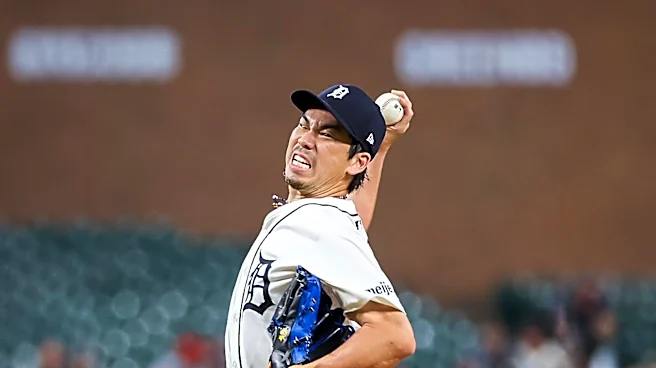
Pitcher Casey Mize has faced significant challenges since being traded to the San Diego Padres. After a successful stint with the Detroit Tigers, where he maintained a sub-3.00 ERA and FIP, his performance has declined sharply with San Diego. In seven
starts for the Padres, Mize has recorded a 6.34 ERA and a 6.1 K/9, contributing to a -0.8 bWAR. This contrasts with his season-long statistics of a 5-9 record, a 3.70 ERA, and 107 strikeouts in 23 appearances. His strikeout percentage has dropped from 25% with Detroit to 15% with San Diego, and his WHIP has increased to 1.41, alongside higher rates of hits and walks allowed per nine innings. The trade, which involved the Padres parting with their No. 2 prospect, was intended to make Mize a difference-maker for San Diego as they contend for a wild card spot, but his struggles have actively hindered their efforts.
Why It's Important?
Casey Mize's performance post-trade highlights the inherent risks and unpredictable nature of player acquisitions in professional sports, particularly in Major League Baseball. For the San Diego Padres, the underperformance of a key trade deadline acquisition like Mize, who was expected to bolster their rotation, directly impacts their playoff aspirations. The investment of a top prospect for a player who subsequently struggles can set back a team's competitive window and deplete its farm system. Conversely, for the Detroit Tigers, the trade appears to have been a shrewd move, as they received prospect Jackson Wolf who has since excelled. This situation underscores how critical player evaluation and integration are for team success and how a single trade can have vastly different outcomes for the involved franchises, affecting their immediate competitiveness and long-term development strategies.
What's Next?
The San Diego Padres will need to address Casey Mize's ongoing struggles as they continue their fight for a National League wild card spot. His current performance makes him a risky option for upcoming starts, especially in high-stakes games. The team may consider adjustments to his role, coaching, or pitching approach to help him regain his form. For Mize, the immediate future involves working to overcome these performance issues and justify the Padres' investment. His ability to adapt and improve will be crucial for his career trajectory and for the Padres' success in the remainder of the season and potentially beyond. The Tigers, having traded Mize, will continue to monitor the development of the prospects they acquired, particularly Jackson Wolf, who has shown promising results in their system.
Beyond the Headlines
The narrative surrounding Casey Mize's post-trade performance extends beyond mere statistics, touching upon the psychological and environmental factors that can influence an athlete's career. A change of scenery, new coaching staff, and increased pressure in a playoff race can profoundly impact a player, especially one who was a former No. 1 overall draft pick with high expectations. The contrast between his success in Detroit and his struggles in San Diego suggests that factors beyond raw talent, such as team chemistry, role definition, and adaptation to a new environment, play a significant role in a player's effectiveness. This situation also raises questions about the long-term value of prospects versus established players in trades, and how teams weigh immediate needs against future potential. The Padres' experience with Mize could influence future trade deadline strategies across MLB, prompting teams to more thoroughly assess a player's fit and resilience in a new context.