



What's Happening?
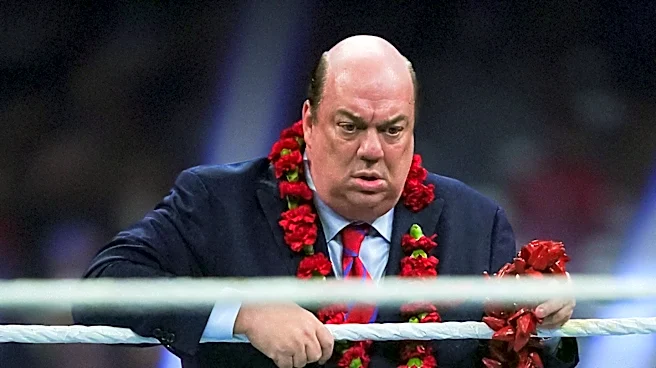
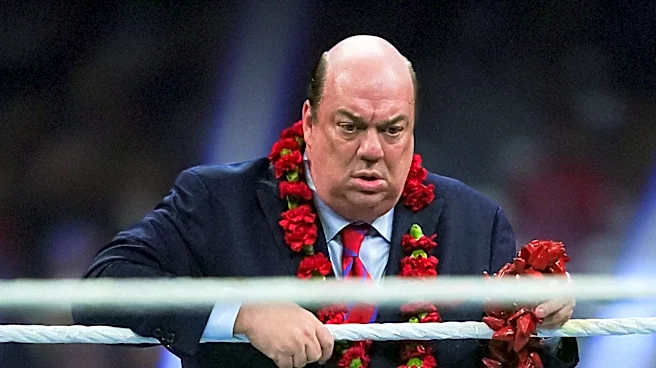
Paul Heyman, a prominent figure in professional wrestling, has openly discussed his personal flaws and unconventional traits, stating that he embraces them as integral to his success. During an interview on "In Depth with Graham Bensinger," Heyman described
himself as a "terribly f***ed up person" but asserted that these perceived imperfections have shaped him and contributed to his achievements. He dismissed the idea of therapy, arguing that his unique characteristics, including symptoms of ADHD and an addiction to the dopamine effect, are what make him who he is. Heyman also reflected on his upbringing, acknowledging potential trauma but defending his parents by noting their own experiences with events like the Holocaust and the Great Depression. He expressed that he was taught to view being different as special, which allows him to be at peace with his self-described 'messed-up' nature. He hopes his children will similarly embrace their own flaws.
Why It's Important?
Heyman's candid remarks offer a unique perspective on self-acceptance and the unconventional paths to success within high-pressure industries like professional wrestling. His embrace of ADHD and dopamine addiction as drivers, rather than hindrances, challenges traditional views on mental health and personal development. This narrative can resonate with individuals who feel marginalized or pressured to conform, suggesting that authenticity and self-acceptance can be powerful tools for achieving goals. For the entertainment industry, particularly professional wrestling, Heyman's longevity and influence underscore the value of distinct personalities and compelling narratives, even if they stem from perceived imperfections. His statements also highlight the potential for individuals to leverage their unique psychological make-up to their advantage, fostering a discussion about neurodiversity and its role in professional achievement. The impact extends to fans and aspiring professionals, offering a message of empowerment and validation for those who might see their own 'flaws' as obstacles.
What's Next?
While Heyman's statements are personal reflections rather than policy announcements, they could spark broader conversations within the entertainment industry and beyond regarding mental health, neurodiversity, and the definition of success. His continued prominence in WWE provides a platform for these discussions to reach a wide audience. There might be increased interest in how other public figures or professionals view their own 'flaws' and how these contribute to their careers. For Heyman himself, his philosophy is likely to continue guiding his professional and personal life, reinforcing his unique brand within professional wrestling. His hope for his children to embrace their own imperfections suggests a generational continuation of this mindset, potentially influencing how they navigate their own careers and public personas.
Beyond the Headlines
Heyman's perspective delves into deeper ethical and cultural dimensions concerning self-perception and societal expectations. In a world often driven by the pursuit of perfection and the masking of vulnerabilities, his open embrace of his 'f***ed-upness' offers a counter-narrative. This challenges the stigma associated with mental health conditions like ADHD and addiction, reframing them not as deficits but as intrinsic parts of one's identity that can be harnessed for success. Culturally, his stance encourages a re-evaluation of what constitutes 'normal' or 'ideal' behavior and personality traits, particularly in high-performance environments. It also touches upon the intergenerational impact of trauma and upbringing, suggesting that understanding one's past can lead to self-acceptance rather than resentment. This could foster a more inclusive dialogue about human diversity and the varied forms that personal and professional fulfillment can take.