










What's Happening?
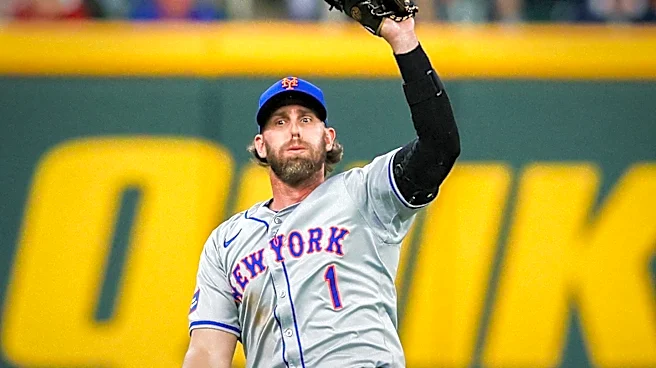
Major League Baseball (MLB) is set to host its Star-Spangled Sunday event, featuring a full day of games broadcasted on NBC and Peacock. The event will showcase a variety of matchups, including the Mets vs. Braves and Padres vs. Dodgers, among others.
A notable feature of this broadcast is the MLB Multiview, which allows fans to watch up to four games simultaneously on web and living room devices. This feature provides a curated four-box presentation of the day's top matchups, enabling viewers to toggle between games easily. Additionally, the 'Catch Up with Key Plays' feature allows fans who join a game late to see all the significant moments they missed. The broadcast schedule includes games starting as early as 12:30 p.m. Eastern Time, with the final game of the day, Red Sox vs. Angels, beginning at 9:30 p.m.
Why It's Important?
The introduction of features like MLB Multiview and 'Catch Up with Key Plays' represents a significant advancement in how sports are consumed, offering fans more control over their viewing experience. This innovation could set a precedent for future sports broadcasts, potentially increasing viewer engagement and satisfaction. By allowing fans to watch multiple games at once, MLB is catering to the modern viewer's desire for flexibility and comprehensive coverage. This approach not only enhances the viewing experience but also has the potential to attract a broader audience, including those who may not have the time to watch full games. The success of these features could influence other sports leagues to adopt similar technologies, further transforming the sports broadcasting landscape.
What's Next?
If successful, MLB's new broadcasting features could lead to wider adoption across other sports and networks. The league may continue to innovate and expand these features, possibly integrating more interactive elements or personalized viewing options. Stakeholders, including broadcasters and advertisers, will likely monitor viewer feedback and engagement closely to assess the impact of these innovations. Positive reception could encourage further investment in technology-driven enhancements, potentially reshaping how live sports are presented and consumed in the future.