







What's Happening?
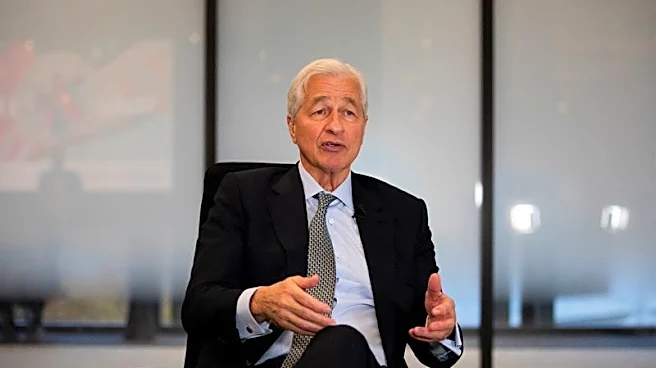
Jamie Dimon, Chairman and CEO of JPMorgan Chase, has publicly acknowledged the growing anti-rich sentiment among Americans. In a recent interview, Dimon expressed understanding of the frustrations faced by working-class citizens, attributing the sentiment to
decades of ineffective public policies that have left lower-income families behind. He highlighted the disparity between wealthy elites and those living in struggling rural and inner-city areas, who face challenges such as failing schools and rising crime. Dimon emphasized the need for bipartisan efforts to address these issues and improve opportunities for lower-income individuals.
Why It's Important?
Dimon's comments reflect a broader societal concern about income inequality and the concentration of wealth in the United States. His acknowledgment of these issues from a prominent Wall Street figure underscores the urgency of addressing economic disparities. The growing anti-rich sentiment could influence public policy debates, potentially leading to calls for reforms in taxation, education, and social services. Businesses and policymakers may need to consider strategies to promote economic inclusivity and address the root causes of inequality to foster social stability and economic growth.
What's Next?
In response to the growing anti-rich sentiment, there may be increased pressure on policymakers to implement reforms aimed at reducing income inequality. This could involve changes in tax policies, investments in education and infrastructure, and initiatives to support low-to-moderate-income communities. Businesses, including JPMorgan, may also explore corporate social responsibility initiatives to contribute to societal well-being. The dialogue initiated by Dimon could lead to broader discussions on economic justice and the role of corporations in addressing social challenges.