






What's Happening?
Cleveland-Cliffs, a North America-based steel producer, is actively seeking a Section Manager Engineering for its Tilden Mine located in Ishpeming, Michigan. This role is critical for providing engineering and asset management support across all facets
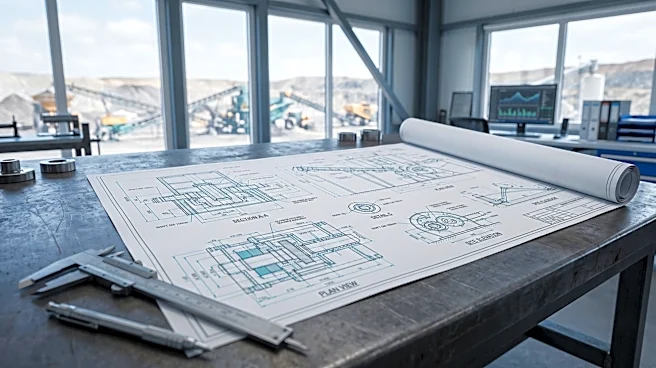
of the Tilden operation. Key responsibilities include managing site reliability engineering, which involves directing preventative maintenance programs, predictive maintenance systems, and root cause failure analysis. The position also entails overseeing site capital/infrastructure project engineering, from initiation through construction and commissioning, as well as managing site maintenance engineering to support asset upkeep and equipment improvements. The successful candidate will assist in developing operating and maintenance plans, budgets, and performance targets, and help prioritize work requests to achieve safety, quality, customer service, and cost objectives. Cleveland-Cliffs emphasizes its commitment to being a vertically integrated steel producer, focusing on value-added sheet products primarily for the automotive industry, and offers a comprehensive compensation package including competitive pay, health insurance, and retirement plans.
Why It's Important?
This job opening is significant for several reasons, particularly for the local economy in Ishpeming, MI, and the broader U.S. manufacturing sector. The Tilden Mine is a crucial part of Cleveland-Cliffs' vertical integration strategy, supplying iron ore pellets essential for steel production. Filling this engineering management role ensures the continued efficient operation and maintenance of a key raw material source for domestic steel manufacturing. The steel industry is foundational to various U.S. sectors, including automotive, construction, and infrastructure. A robust and well-managed mining operation like Tilden directly supports the supply chain for these industries, contributing to national economic stability and reducing reliance on foreign imports. Furthermore, the position highlights Cleveland-Cliffs' ongoing investment in its U.S. operations and its commitment to maintaining a skilled workforce, which can have positive ripple effects on local employment and economic development in Michigan.
What's Next?
Cleveland-Cliffs will proceed with the hiring process for the Section Manager Engineering position, evaluating candidates with a B.S. in Engineering, Metallurgy, or equivalent, and 10-12 years of supervisory/managerial experience in maintenance, operations, and administration. The company is also open to considering relocation assistance for highly qualified candidates from outside the local area, indicating a broad search for talent. Once filled, the new Section Manager will be instrumental in optimizing the Tilden Mine's operations, focusing on enhancing reliability, managing capital projects, and improving maintenance engineering. This will likely lead to continued operational efficiencies and potentially contribute to the company's overall financial performance. The ongoing investment in such critical roles underscores Cleveland-Cliffs' strategy to strengthen its domestic steel production capabilities and maintain its competitive edge in the North American market.
Beyond the Headlines
Beyond the immediate hiring, this job opening reflects a broader trend in the U.S. industrial sector towards strengthening domestic supply chains and investing in advanced engineering and asset management. The emphasis on site reliability engineering, predictive maintenance, and root cause failure analysis indicates a strategic shift towards more proactive and data-driven operational management. This approach is crucial for maximizing efficiency, reducing downtime, and extending the lifespan of critical infrastructure in heavy industries. For the U.S. steel industry, which faces global competition and evolving market demands, such investments in engineering leadership are vital for maintaining technological competitiveness and operational resilience. The role also highlights the ongoing demand for specialized engineering talent in traditional industries, underscoring the importance of STEM education and workforce development to support the nation's industrial base.