





What's Happening?
The global oil market has transitioned from concerns over supply shortages to worries about an oversupply of crude oil. Brent crude oil futures are trading around $73 a barrel, a significant drop from the $126 peak in April, which was driven by fears
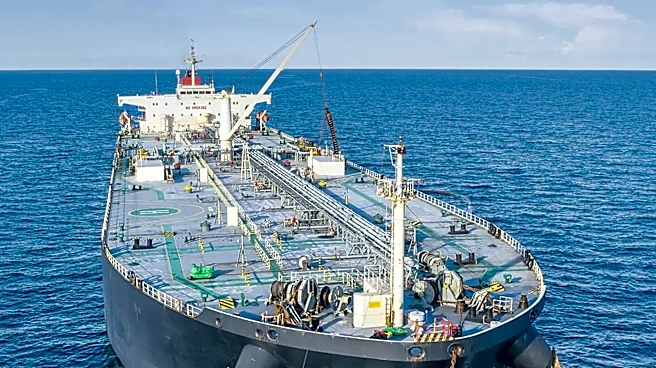
of disruptions due to the Iran conflict. The price decline is attributed to a faster-than-expected recovery in oil supply, with about 2 million barrels per day of production restored in the Gulf region over the past three weeks. This recovery includes increased shipments from Saudi Arabia and Kuwait, with Saudi Arabia on track for record exports through its Red Sea terminal. Analysts from Rystad Energy and ING highlight that the market is expected to be well-supplied through 2027, with geopolitical risks having minimal impact on current prices.
Why It's Important?
The shift in the oil market from shortage fears to surplus concerns has significant implications for global economies and energy markets. The recovery in oil supply is prompting major financial institutions like Goldman Sachs and Morgan Stanley to revise their oil price forecasts downward, reflecting a more bearish outlook. This change in market dynamics could lead to lower energy costs for consumers and industries, potentially boosting economic activities. However, the surplus also poses challenges for oil-producing countries that rely heavily on oil revenues, as prolonged low prices could impact their economic stability. Additionally, the ongoing uncertainty around the Strait of Hormuz remains a critical factor, as any disruptions in tanker traffic could reverse the current supply recovery.
What's Next?
The oil market will continue to monitor the situation in the Strait of Hormuz, as it remains a key uncertainty. Producers are watching for normalization in tanker flows, which is crucial for maintaining the current supply levels. If disruptions occur, producers may need to adjust output, potentially delaying the full recovery into the next year. Furthermore, the market will keep an eye on demand trends, particularly in China and Europe, as well as the impact of electric vehicles on long-term oil consumption. These factors will influence future price movements and the strategic decisions of oil producers and investors.