






What's Happening?
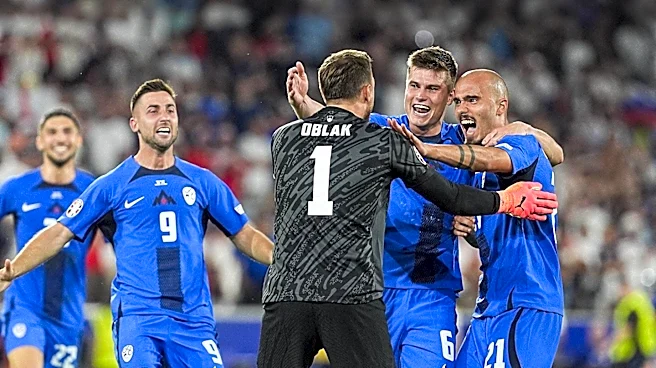
Jan Oblak, the captain of the Slovenian national football team and a player for Spanish club Atletico Madrid, has been listed among the 100 wealthiest Slovenians. According to the Finance Manager magazine's annual list, Oblak holds 65.2 million euros,
making him the only footballer on the list. He ranks behind basketball superstar Luka Dončić, who is the wealthiest athlete at 149 million euros, and retired basketball player Goran Dragić, with 69.4 million euros. Anže Kopitar, a recently retired hockey player, is also on the list with 49.9 million euros. The overall list is topped by Vesna and Dari Južna with 622 million euros. This recognition highlights the significant financial success achieved by top Slovenian athletes in their respective fields.
Why It's Important?
The inclusion of Jan Oblak and other athletes on Slovenia's wealth list underscores the growing financial power and influence of professional sports figures. This trend reflects the global commercialization of sports, where top-tier athletes command substantial salaries, endorsement deals, and investment opportunities. For Slovenia, the presence of its athletes among the nation's wealthiest individuals can inspire younger generations to pursue sports professionally, viewing it as a viable path to financial success. It also indicates a shift in wealth distribution, with sports becoming a significant contributor to national wealth alongside traditional business sectors. The financial achievements of these athletes can also boost the national profile of Slovenian sports on the international stage.
What's Next?
Looking ahead, Finance magazine anticipates that cyclist Tadej Pogačar will join the list of wealthiest Slovenians within the next two years, further solidifying the presence of athletes among the nation's elite. This projection suggests a continued trend of high-earning athletes accumulating significant wealth. For Jan Oblak, his ongoing career with Atletico Madrid and his role as captain of the national team are likely to sustain his financial standing. The continued success of Slovenian athletes in international competitions could further enhance their marketability and earning potential, potentially leading to more sports figures appearing on future wealth lists. This could also prompt discussions about the economic impact of sports on the national economy.
Beyond the Headlines
Beyond the immediate financial rankings, the presence of athletes like Jan Oblak on wealth lists reflects broader societal shifts. It highlights the increasing value placed on athletic talent and entertainment in the modern economy. This phenomenon can also spark discussions about wealth inequality and the sources of wealth in a nation. While athletes' earnings are often tied to their unique skills and global appeal, their inclusion among traditional business magnates can prompt a re-evaluation of what constitutes economic success and influence. It also showcases the global nature of professional sports, where talent can transcend national borders and generate substantial income, contributing to the individual's wealth and potentially to the national economy through taxes and investments.