









What's Happening?
Canter's Deli, a landmark establishment in the Fairfax District of Los Angeles, is grappling with a substantial increase in its utility bills. Owner Marc Canter reported that the deli's Los Angeles Department of Water and Power (LADWP) bill has risen
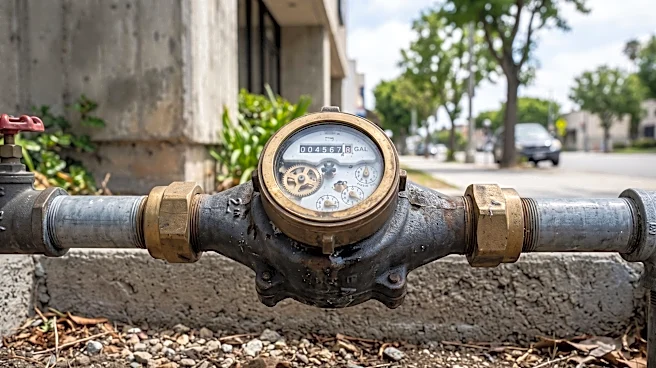
from approximately $24,000 to $36,000 per month over the past six months. This surge in costs is occurring amidst broader economic challenges, including a potential recession in Los Angeles, reduced tourism due to factors like fires, the writers' strike, and immigration raids. The LADWP has reviewed Canter's Deli's accounts and stated that electricity usage remained relatively stable year over year, with only a modest 6.6% increase in electric charges, primarily due to higher peak demand. However, water charges increased by 21.6% and sewer charges by 45.0%, indicating these are the primary drivers of the higher bills. The LADWP suggests that a water leak or another source of elevated water consumption might be responsible for the significant increases in water and sewer costs and has offered an in-person field investigation.
Why It's Important?
The situation at Canter's Deli highlights the growing financial pressures faced by businesses in urban centers, particularly in the hospitality sector. Escalating utility costs, even when electricity usage remains stable, can severely impact operational budgets and profitability. The significant increases in water and sewer charges, as identified by LADWP, point to potential infrastructure issues or undetected leaks that could be widespread among older commercial properties. This scenario underscores the vulnerability of businesses to rising operational expenses, which can be exacerbated by broader economic downturns and reduced customer traffic. For consumers, such increases can eventually translate into higher prices for goods and services as businesses attempt to offset their rising costs, contributing to inflationary pressures and potentially affecting local economies.
What's Next?
Canter's Deli is planning to meet with LADWP representatives to address the utility bill increases. The LADWP has offered an in-person field investigation to assess both water and electric service, identify potential leaks or unusual usage patterns, and provide recommendations on water conservation and energy-efficiency incentives. While Marc Canter acknowledges the possibility of a leak, he expresses doubt, noting that the charges for his two adjacent buildings do not fully account for the $12,000 increase. He also speculates that water coolers on the roof, used for air conditioning during the summer heat, or changes in sewer rates due to an outdated agreement with the city, could be contributing factors. The outcome of the LADWP investigation and subsequent discussions will determine whether the deli can find relief from these high costs and potentially uncover broader issues affecting other businesses in the area.
Beyond the Headlines
The challenges faced by Canter's Deli extend beyond a simple utility bill dispute, touching upon the complex interplay of urban infrastructure, economic shifts, and business sustainability. The potential for an aging infrastructure to contribute to higher water and sewer costs, as suggested by the LADWP's findings, could indicate a systemic issue affecting many older establishments in Los Angeles. Furthermore, the deli's struggle reflects the broader economic fragility experienced by local businesses in the wake of various crises, from natural disasters to labor disputes and shifts in tourism. This situation could prompt a closer examination of utility rate structures, infrastructure maintenance, and support mechanisms for small businesses, especially those with historical significance, to ensure their long-term viability in a rapidly changing economic landscape.