


What's Happening?
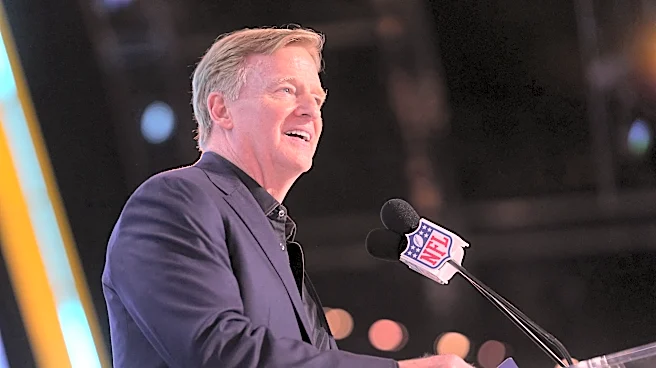
Robert Kraft, owner of the New England Patriots, chaired the compensation committee responsible for negotiating a four-year contract extension for NFL Commissioner Roger Goodell. This extension will keep Goodell in his position through March 31, 2031,
at which point he will be 72 years old. The new agreement is heavily performance-based, with over 95% of Goodell's total compensation tied to specific metrics. This structure aims to align the Commissioner's financial incentives with the long-term success and interests of the league. Under Goodell's leadership, the NFL has seen significant growth, with average team values climbing to $9.34 billion and total franchise values approaching $300 billion. League revenue has also increased to over $20 billion annually. His career earnings are projected to approach $1 billion by the end of this new contract, largely due to this performance-driven compensation model.
Why It's Important?
This contract extension is significant for the NFL as it solidifies leadership continuity for the foreseeable future, ensuring that the league's strategic direction remains consistent. The performance-based compensation structure for Commissioner Goodell directly links his earnings to the financial health and growth of the NFL, incentivizing continued expansion in revenue, media deals, and franchise values. This approach benefits team owners, as their investments in franchises have seen substantial appreciation under Goodell's tenure. The stability in leadership could also influence future labor agreements, media rights negotiations, and international expansion efforts, all of which are crucial for the league's economic prosperity. For players and fans, the implications are less direct but still relevant, as a financially robust league can invest more in player welfare, fan experience, and community initiatives, though some may view the high compensation critically.
What's Next?
With Commissioner Goodell's contract secured until 2031, the NFL can proceed with long-term planning with a clear leadership structure. This stability will likely facilitate ongoing negotiations for future media rights, which are a major driver of league revenue. The focus will remain on continuing the league's financial growth trajectory, potentially through further international expansion, new technological integrations, and fan engagement strategies. The performance-based nature of Goodell's compensation means that the league's financial metrics, such as revenue and franchise valuations, will be under continuous scrutiny. Stakeholders, including team owners and the NFL Players Association, will monitor these developments closely, as they directly impact their respective interests within the league's ecosystem.
Beyond the Headlines
The extension of Commissioner Goodell's contract, with its emphasis on performance-based compensation, highlights a broader trend in executive leadership within major sports leagues. It underscores the increasing financialization of sports, where the success of a league is measured not just by on-field performance but by its economic output and brand value. This model raises questions about the balance between commercial interests and the integrity of the sport, as well as the distribution of wealth generated within the league. While owners benefit from rising franchise values, discussions about player salaries, fan affordability, and community impact often accompany such lucrative executive contracts. The long-term implications could include further consolidation of power within the commissioner's office and a continued focus on maximizing revenue streams, potentially influencing everything from game scheduling to rule changes.