



What's Happening?
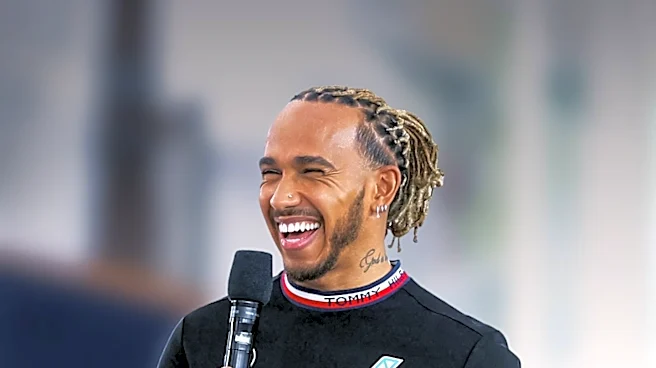
Lewis Hamilton has expressed a strong desire for Formula 1 to return to Africa, a continent that has not hosted an F1 race since the 1993 South African Grand Prix. Hamilton has been actively advocating for this return for the past six to seven years,
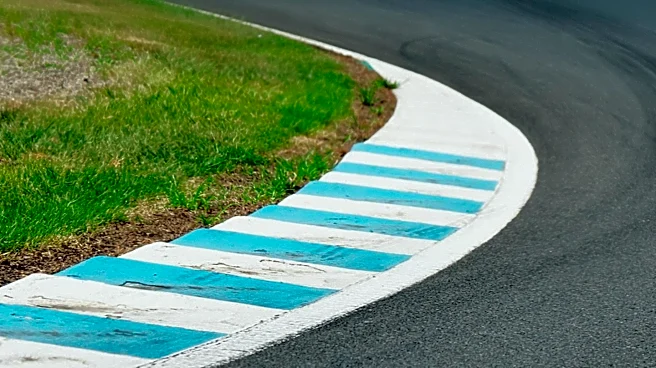
engaging with F1's top brass and stating his wish not to retire from the sport without having raced in Africa. While previous speculation centered on the Kyalami circuit, new plans have emerged for a 'world-class' circuit in South Africa's Swartland region. Blue Mountain Racing, an organization of South African business leaders and motorsport experts, has revealed proposals for this new track, aiming to host F1 as early as 2031. The proposed circuit is designed to meet FIA grade one standards, featuring a 4.8km track with multiple overtaking possibilities, and a capacity for approximately 125,000 spectators.
Why It's Important?
A return of Formula 1 to Africa would represent a significant expansion of the sport's global footprint and a fulfillment of a long-standing desire from drivers and fans alike. For the U.S. and global F1 audience, it would introduce a new and potentially unique racing venue, adding diversity to the calendar. From a business perspective, establishing a race in Africa could unlock new markets for F1, attracting new sponsors, viewers, and investment. It also aligns with broader efforts to promote diversity and inclusion within motorsport, as advocated by Hamilton. The proposed privately funded project by Blue Mountain Racing suggests a sustainable model for bringing F1 to the continent, potentially inspiring similar initiatives in other underserved regions. The economic impact on the host region, including tourism, job creation, and infrastructure development, could be substantial, making it a win-win scenario for both F1 and the local economy.
What's Next?
Blue Mountain Racing has already made initial contact with F1 and MotoGP, and is engaging with national and provincial governments as design and planning work continues for the proposed Swartland circuit. The organization envisions a year-round precinct beyond just the race track, including a conference center, hospitality and residential developments, an automotive hub, and a driving academy. While these are currently proposals, the strong advocacy from figures like Lewis Hamilton and the detailed plans from Blue Mountain Racing suggest a concerted effort to make an African Grand Prix a reality. The next steps will likely involve further negotiations with F1 management, securing necessary approvals, and attracting the significant investment required for such a large-scale project. The timeline of 2031 indicates a long-term vision, allowing ample time for development and integration into the F1 calendar.
Beyond the Headlines
The potential return of Formula 1 to Africa carries profound cultural and historical significance. It would not only mark a new chapter for motorsport on the continent but also serve as a powerful symbol of global connectivity and opportunity. For Lewis Hamilton, who is half African, this initiative is deeply personal, reflecting a commitment to using his platform to drive positive change and expand the sport's reach. Beyond the economic benefits, an F1 race in Africa could inspire a new generation of motorsport enthusiasts and professionals from the continent, fostering talent and creating pathways into a sport traditionally dominated by European nations. It also challenges the perception of Africa as solely a recipient of aid, showcasing its potential as a vibrant hub for international events and technological innovation. The project's emphasis on a year-round precinct and community development further highlights a vision for sustainable impact beyond a single race event.