


![Eric Bischoff Admits WWE HOFer Hulk Hogan 'Lost Sight Sometimes Of Who Terry [Bollea] Was'](https://glance-mob.glance-cdn.com/public/cardpress/binge-magazine-card-generation/spaces/US/en/wrestling-inc./images/P9a9BjtL-image-179233652814121612.webp)



What's Happening?
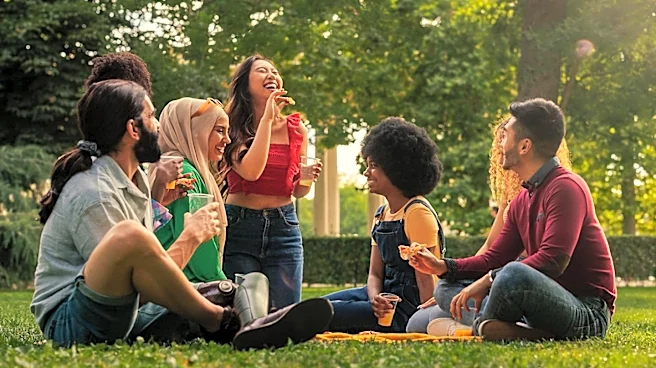
Gen Z's unique slang, characterized by terms like 'doomscroll' and 'crash out,' is rapidly spreading and influencing the English language, with many terms even being added to dictionaries. This phenomenon is largely driven by social media, which accelerates
the dissemination of new vocabulary. While slang has always existed, Gen Z is the first generation to grow up with constant digital connectivity, blurring the lines between informal online communication and formal language. This rapid evolution raises questions about the appropriateness of slang in professional settings and the potential for misunderstandings between generations. Some students believe certain terms deserve dictionary inclusion for older generations to understand, while others suggest they belong in alternative dictionaries like Urban Dictionary.
Why It's Important?
The rapid spread and integration of Gen Z slang into mainstream language have significant implications for communication, education, and professional environments. It highlights a growing generational divide in linguistic understanding, potentially leading to miscommunication and social stigma in formal contexts. For educators, it presents a challenge in balancing the acceptance of evolving language with the need to teach standard English. In the workplace, the use of slang can impact perceptions of professionalism and clarity. The phenomenon also underscores the powerful influence of social media algorithms in shaping cultural norms and language at an unprecedented speed, creating a dynamic linguistic landscape where terms can become popular and obsolete very quickly.
What's Next?
The evolution of Gen Z slang is expected to continue at a rapid pace, driven by social media. While some terms may fade, others will likely become more integrated into everyday language, potentially influencing future dictionary additions. The ongoing challenge will be for different generations to navigate these linguistic differences, with efforts possibly focusing on improving intergenerational communication. Educational institutions may need to adapt their curricula to address the nuances of formal versus informal language use in a digitally connected world. The debate over which slang terms warrant inclusion in official dictionaries will likely persist, reflecting broader societal discussions about language evolution and cultural relevance. The speed of slang dissemination also suggests that linguistic trends will remain highly dynamic and influenced by online communities.
Beyond the Headlines
The proliferation of Gen Z slang reflects deeper cultural and psychological shifts within this generation. Slang serves as a form of 'code-switching' and a powerful tool for fostering identity, humor, and connection within specific online and offline communities. For a generation raised with constant digital scrutiny, slang can offer a sense of belonging and a way to express complex ideas concisely. However, the rapid, algorithm-driven spread of these terms also creates fragmented linguistic experiences, where different online communities may develop distinct vocabularies. This phenomenon highlights the tension between the desire for unique self-expression and the need for universal understanding, raising questions about the future of shared language and the potential for linguistic isolation in an increasingly digital world. It also underscores the ethical considerations of how language evolves and who determines its formal recognition.