








What's Happening?
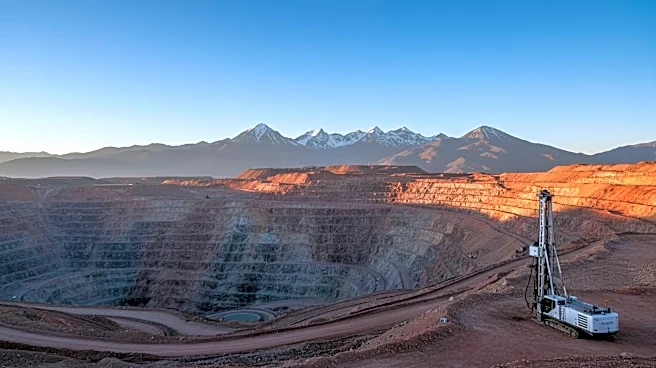
BHP Group, a leading global diversified natural resources and mining company, has secured an initial environmental permit for the expansion of its Escondida copper mine in Chile. This approval allows BHP to proceed with early-stage projects valued at $1.3
billion, which include sulphide leaching operations and improvements to electricity infrastructure. The Escondida site, in which BHP holds a 57.5% interest, is also partially owned by Rio Tinto Group and a consortium of Japanese companies. This expansion is part of BHP's broader investment strategy, which involves spending between $10.7 billion and $14.7 billion on its Chilean operations over the coming years. The upgrades are crucial for addressing declining ore grades and supporting BHP's long-term goal of doubling its global copper output to over two million tonnes by the mid-2030s.
Why It's Important?
The expansion of the Escondida mine is significant as it aligns with the rising global demand for copper, a critical component in decarbonization initiatives and the development of data center infrastructure. By securing the environmental permit, BHP can advance its strategic investments in Chile, which are essential for maintaining its competitive edge in the global mining industry. The expansion not only supports BHP's growth objectives but also contributes to the broader economic landscape by potentially increasing copper supply, which is vital for various industries. Additionally, this move underscores the importance of sustainable practices in mining operations, as securing environmental permits is a crucial step in ensuring that expansions are conducted responsibly.
What's Next?
With the environmental permit secured, BHP is expected to commence the early-stage projects at the Escondida site. The company will likely focus on implementing the planned sulphide leaching operations and electricity infrastructure improvements. As BHP progresses with its investment plan, stakeholders will be watching closely to assess the impact of these developments on copper production and the company's overall market position. The expansion could also prompt reactions from environmental groups and local communities, who may have concerns about the ecological and social implications of increased mining activities. BHP's ability to address these concerns and maintain transparent communication with stakeholders will be crucial for the project's success.