



What's Happening?
At Seawork 2026, OceanAlpha, a leader in Uncrewed Surface Vessel (USV) technology, highlighted its latest advancements in offshore inspection capabilities. Jason Liu, Sales Director at OceanAlpha, discussed the company's focus on expanding its USV technology to meet
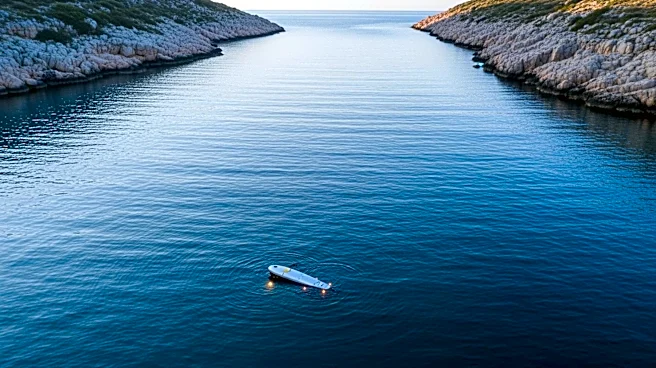
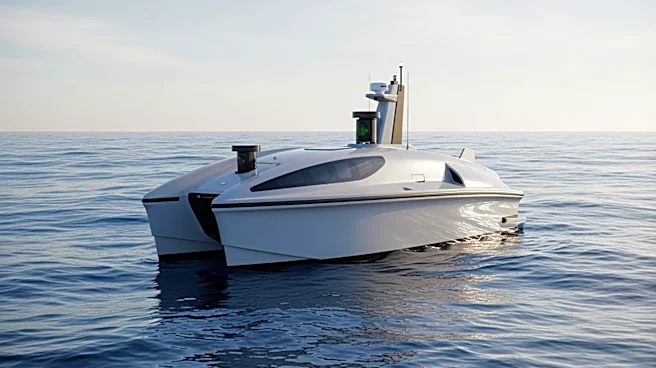
growing demands for offshore subsea inspections. The company introduced the V180 USV–ROV platform, a 24-meter catamaran designed for deepwater Inspection, Maintenance, and Repair (IMR) operations. This platform is equipped with advanced systems for deploying Remotely Operated Vehicles (ROVs) at depths of up to 3,000 meters. OceanAlpha's presence at Seawork underscores its commitment to providing innovative solutions for offshore asset inspection, hydrographic surveying, and maritime security.
Why It's Important?
The introduction of advanced USV technology by OceanAlpha is significant for the maritime industry, particularly in enhancing the efficiency and safety of offshore operations. As the demand for subsea inspections grows, OceanAlpha's technology offers a solution that can reduce operational risks and costs associated with traditional manned inspections. The V180 USV–ROV platform's ability to perform deepwater inspections is crucial for industries such as oil and gas, where maintaining offshore infrastructure is vital. Additionally, the use of USVs in hydrographic surveying and maritime security can lead to more precise data collection and improved safety measures, benefiting both commercial and environmental stakeholders.
What's Next?
OceanAlpha plans to continue developing its USV technology to meet the evolving needs of the offshore industry. The company is in discussions with clients to further refine the V180 platform and explore additional applications for its USVs. As the market for subsea inspections and maritime security grows, OceanAlpha is poised to expand its product offerings and strategic partnerships. The company also aims to enhance communication stability for its USVs, ensuring reliable operations even in challenging offshore environments. Future developments may include integrating more advanced navigation and control systems to further improve the safety and efficiency of offshore inspections.