



What's Happening?
Slow tourism is emerging as a significant trend, particularly in remote and less commercialized areas. This approach to travel emphasizes a slower pace, deeper engagement with nature, and a more intimate connection with local cultures, contrasting sharply
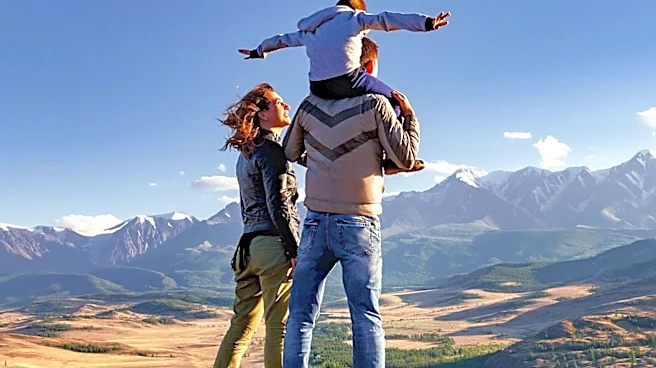
with traditional fast-paced tourism. An example of this trend is seen in Kyrgyzstan, where hiking in the Tien Shan mountains has become increasingly popular. Travelers are drawn to these regions for the lack of connectivity, including the absence of Wi-Fi and phone signals, which allows for an authentic and immersive experience. Many parts of Kyrgyzstan, despite growing interest, remain wonderfully remote, with some areas not even appearing on common online maps. This disconnect from modern amenities and social media is a key appeal for those seeking a different kind of travel.
Why It's Important?
The rise of slow tourism signifies a shift in traveler preferences, moving away from highly commercialized and fast-paced vacations towards more authentic and immersive experiences. This trend has implications for the tourism industry, potentially encouraging the development of sustainable and community-focused travel options in remote regions. For local economies in areas like Kyrgyzstan, it could mean a more controlled and beneficial form of tourism that respects cultural integrity and environmental preservation, rather than overwhelming local infrastructure. It also highlights a growing desire among consumers to disconnect from digital life and reconnect with nature and local communities, which could influence how travel packages are designed and marketed globally. This movement could also inspire other industries to consider 'slow' approaches, emphasizing quality, sustainability, and genuine engagement over speed and mass production.
What's Next?
As slow tourism gains momentum, tour operators and local governments in remote destinations may increasingly focus on developing infrastructure that supports this type of travel while preserving the unique characteristics that attract visitors. This could involve promoting eco-friendly accommodations, guided tours that emphasize cultural exchange, and initiatives to protect natural landscapes. There might also be a push for more responsible tourism practices, ensuring that the benefits of increased visitor numbers are shared equitably with local communities. Furthermore, the success of destinations like Kyrgyzstan in attracting 'disconnected' travelers could inspire other remote regions to market their unique selling points, such as untouched nature and authentic cultural experiences, to a growing segment of the travel market seeking respite from the digital world.
Beyond the Headlines
The growing appeal of slow tourism reflects a broader societal yearning for authenticity and a break from constant digital connectivity. In an increasingly hyper-connected world, the deliberate choice to travel to places without Wi-Fi or phone signal speaks to a desire for mental detox and a return to simpler, more present experiences. This trend challenges the conventional notion of travel as a means to collect social media-worthy moments, instead promoting a deeper, more personal engagement with the environment and local cultures. It also raises questions about the impact of technology on our daily lives and the value we place on being 'unplugged.' The ethical implications of tourism in remote areas, particularly concerning the balance between economic development and cultural preservation, will become increasingly important as these destinations gain popularity.