








What's Happening?
Hawaiian Airlines has announced a significant change in its meal service for economy passengers on domestic transpacific flights. Starting July 1, the airline will discontinue complimentary meals in the Main Cabin, except for the Honolulu to New York
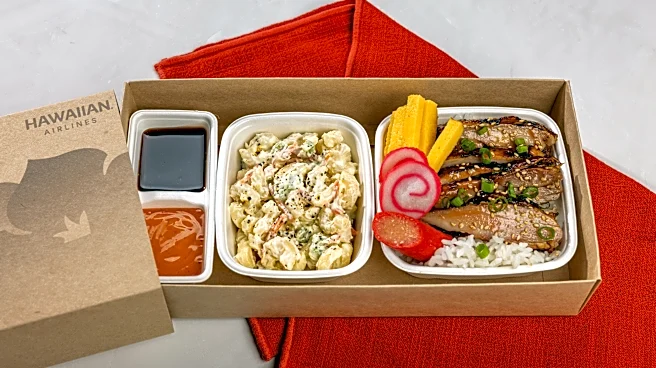
City (JFK) route, where free meals will still be provided. Instead, passengers will have the option to pre-order meals from a menu featuring dishes by popular Hawaiian chefs. This change is part of Hawaiian Airlines' effort to enhance its onboard service with more diverse and elevated meal options, such as crispy mochiko chicken with garlic noodles and barbecue teriyaki chicken bento. The airline aims to offer a taste of Hawaii with these new meal choices, which will be available for purchase on most flights between Hawaii and the U.S.
Why It's Important?
The decision by Hawaiian Airlines to eliminate free meals for economy passengers on most transpacific flights reflects a broader trend in the airline industry towards cost-cutting and revenue generation through ancillary services. By introducing a pre-order meal system, the airline can potentially increase its revenue while offering passengers a more personalized dining experience. This move could influence other airlines to adopt similar strategies, especially as they seek to recover financially from the impacts of the pandemic. For passengers, this change means adjusting to new norms in air travel, where additional costs for services that were once complimentary are becoming more common.
What's Next?
As Hawaiian Airlines implements this new meal policy, it will be important to monitor passenger feedback and the financial impact on the airline. The success of this initiative could lead to further changes in onboard services, not only for Hawaiian Airlines but potentially across the industry. Other airlines may watch closely to see if this model proves profitable and enhances customer satisfaction. Additionally, Hawaiian Airlines may continue to refine its menu offerings and pricing strategies based on passenger preferences and demand.