


What's Happening?
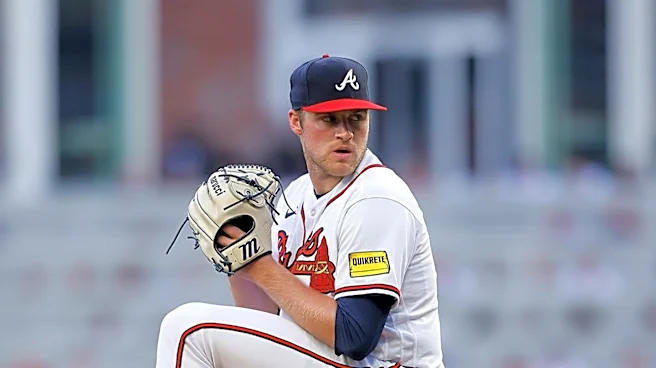
The Atlanta Braves are confronting significant challenges regarding their pitching staff as they look towards the 2027 MLB season. Despite winning 94 games in the past season, a testament to their player development and front office, the team's pitching rotation
faces uncertainty due to injuries. Key pitchers Spencer Strider and Spencer Schwellenbach, who were expected to be central to the team's success, both dealt with injuries. Their ability to return to previous performance levels, even at 80%, is a major question mark for the Braves. Additionally, the potential departures of Tyler Mahle and Raisel Iglesias this winter further complicate the team's pitching outlook, requiring the front office to find viable replacements.
Why It's Important?
The health and performance of key pitchers like Spencer Strider and Spencer Schwellenbach are crucial for the Atlanta Braves' competitiveness in the highly competitive MLB landscape. Injuries to star players can significantly impact a team's season, affecting their chances of making the playoffs and contending for a World Series title. The need to find replacements for potentially departing pitchers also highlights the financial and strategic pressures on the Braves' front office. Successfully navigating these challenges will determine whether the Braves can maintain their status as one of the top teams in MLB, influencing fan engagement, broadcast revenues, and overall team valuation. The situation underscores the inherent risks and uncertainties in professional sports, where player health and roster management are paramount.
What's Next?
The Atlanta Braves' immediate focus will be on assessing the recovery and rehabilitation progress of Spencer Strider and Spencer Schwellenbach. The team's front office will also be actively engaged in the free-agent market this winter to secure viable replacements for any departing pitchers and to bolster their rotation depth. This could involve signing high-impact arms to create an elite pitching duo, as some predictions suggest. The success of these offseason moves will be critical in shaping the Braves' roster for the 2027 season and beyond. The team will need to balance player development with strategic acquisitions to ensure a strong and resilient pitching staff capable of sustaining their competitive edge.
Beyond the Headlines
The Braves' pitching dilemma extends beyond immediate roster concerns, touching upon broader trends in professional baseball, particularly the increasing prevalence of pitcher injuries and the strategic importance of player development. The reliance on young talent and the subsequent impact of injuries on those prospects highlight the fragility of long-term team planning. This situation could influence future contract negotiations, player management strategies, and the allocation of resources towards injury prevention and rehabilitation programs across the league. It also underscores the ongoing challenge for teams to build sustainable success in an era where pitching health is a constant variable, potentially leading to more conservative approaches in managing young pitchers' workloads.