







What's Happening?
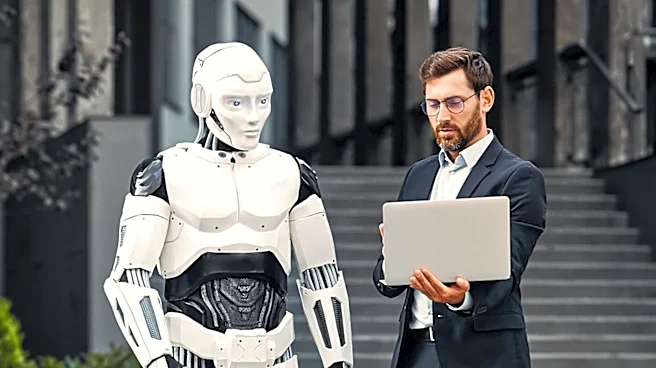
Organizations are increasingly focusing on reskilling and upskilling their workforces to address the rapid changes in job roles driven by technology, particularly artificial intelligence. This proactive approach aims to equip employees with new skills
for future demands and strengthen internal talent pipelines rather than solely relying on external hiring. Key strategies include systematic workforce planning that identifies future skill requirements, continuous learning initiatives, and the integration of skills development into daily work processes. For instance, in the cybersecurity sector, there's a growing need for professionals who combine core security expertise with AI fluency, analytical thinking, and sound decision-making, as AI takes over repetitive tasks. Companies are also using skills mapping to identify internal talent, plan development, and align workforce capabilities with changing needs. This shift is crucial as skill sets that meet current business requirements may become obsolete within a few years.
Why It's Important?
This emphasis on reskilling and upskilling is vital for U.S. industries to maintain competitiveness and resilience in a rapidly evolving global economy. By investing in their existing workforce, companies can mitigate the risks associated with skill shortages, reduce recruitment delays, and lower hiring costs. It also fosters long-term employee commitment and retention, as employees are more likely to stay with organizations that offer clear learning opportunities and career advancement paths. The integration of AI into various professional workflows necessitates a workforce capable of human-AI collaboration, critical evaluation, and ethical judgment, ensuring that human oversight remains central to decision-making. This strategic investment in human capital is essential for businesses to adapt to technological advancements, drive innovation, and sustain performance in an increasingly dynamic market.
What's Next?
Organizations are expected to continue refining their workforce development strategies, with a stronger focus on predictive workforce planning and the use of data analytics to identify future skill gaps. This will involve HR leaders leveraging workforce analytics, business forecasts, employee capability assessments, and labor market trends to create targeted learning initiatives. The collaboration between HR teams, business leaders, and educational institutions will become more critical to establish career-transition pathways and incorporate practical, hands-on training. Furthermore, the adoption of digital learning platforms, mentorship programs, and cross-functional projects will likely expand, supporting both individual growth and broader organizational objectives. The goal is to create a more flexible, resilient, and future-proof workforce capable of adapting to continuous technological and business changes.
Beyond the Headlines
The shift towards continuous reskilling and upskilling reflects a fundamental change in the employer-employee relationship, moving towards a model of shared responsibility for career development. This approach not only addresses immediate skill gaps but also cultivates a culture of lifelong learning, which is crucial for individual adaptability and societal progress. Ethical considerations surrounding AI integration, such as data privacy, transparency, and human oversight, will become increasingly prominent, requiring professionals to develop strong ethical judgment alongside technical skills. Moreover, this trend has implications for educational institutions, which will need to align their curricula more closely with evolving industry demands, incorporating practical experience and interdisciplinary learning to prepare students for future job markets. The long-term success of this paradigm shift will depend on sustained leadership commitment and a holistic approach that values human potential alongside technological advancement.