





What's Happening?
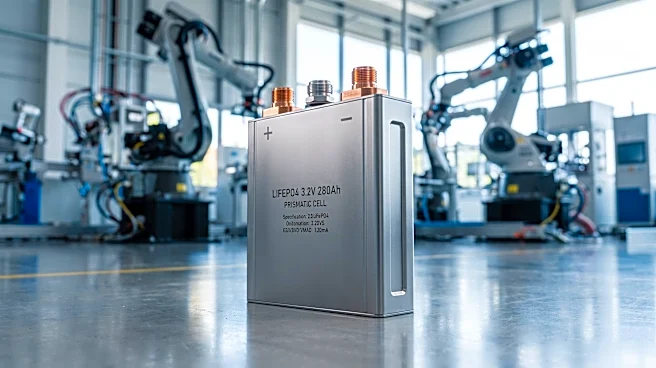
Ford Motor Company has officially commenced battery cell production at its BlueOval Battery Park Michigan facility. This marks a significant step as Ford becomes the first to deliver Lithium Iron Phosphate (LFP) batteries in the U.S. for mainstream consumer
automotive use. The initial LFP prismatic cells produced are being shipped to the Louisville Assembly Plant, where they will be used to power Ford Fathom prototypes. This move is part of Ford's broader strategy to enhance its capability in delivering batteries for more affordable electric vehicles. The company is also leveraging this LFP technology and manufacturing expertise to establish a new energy storage business under Ford Energy. Charles Poon, vice president of Hardware Engineering at Ford, highlighted this milestone.
Why It's Important?
This development is crucial for the U.S. automotive industry and the broader electric vehicle market. By producing LFP batteries domestically, Ford aims to reduce its reliance on foreign supply chains, which can lead to greater stability and potentially lower costs for EV manufacturing. The focus on LFP batteries is particularly significant because they are generally more affordable and offer a longer lifespan compared to other battery chemistries, making electric vehicles more accessible to a wider consumer base. This strategic shift could accelerate EV adoption in the U.S. and bolster domestic manufacturing capabilities, creating jobs and fostering technological independence in the critical battery sector. Furthermore, the application of this technology to a new energy storage business indicates Ford's ambition to diversify its portfolio and capitalize on the growing demand for energy solutions beyond automotive applications.
What's Next?
The immediate next step involves the integration of these domestically produced LFP batteries into Ford Fathom prototypes at the Louisville Assembly Plant. This will allow Ford to test and refine the performance of these batteries in real-world applications, paving the way for their eventual deployment in mainstream consumer electric vehicles. The establishment of Ford Energy's new energy storage business, leveraging the same LFP technology, suggests future expansion into stationary energy storage solutions, which could impact grid stability and renewable energy integration. Continued investment in battery production and research is anticipated as Ford aims to scale up its EV offerings and solidify its position in the evolving electric mobility and energy sectors.
Beyond the Headlines
Ford's venture into domestic LFP battery production carries deeper implications for national economic security and environmental sustainability. By localizing battery manufacturing, the U.S. can mitigate geopolitical risks associated with global supply chain disruptions and reduce its carbon footprint by shortening transportation distances for critical components. This initiative also signals a broader trend among major automakers to internalize key aspects of EV production, moving beyond assembly to core component manufacturing. The emphasis on 'more affordable electric vehicles' through LFP technology could democratize EV ownership, making sustainable transportation options available to a larger segment of the population. This strategic pivot could also spur further innovation in battery technology and manufacturing processes across the U.S., fostering a competitive domestic industry.