






What's Happening?
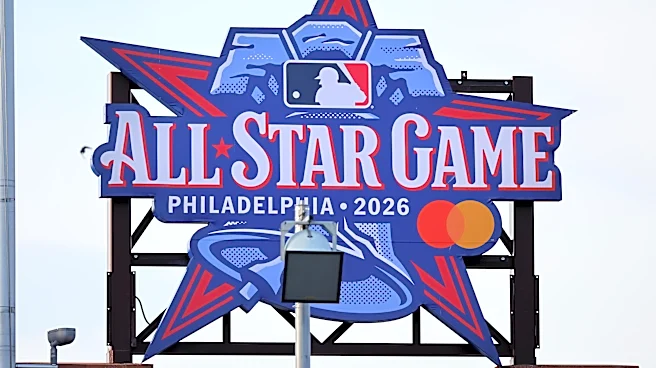
Major League Baseball (MLB) has announced a significant prize for the winner of this year's Home Run Derby, set to take place at Philadelphia's Citizens Bank Park. The top prize of $1 million is notable as it surpasses the 2026 MLB salary for several
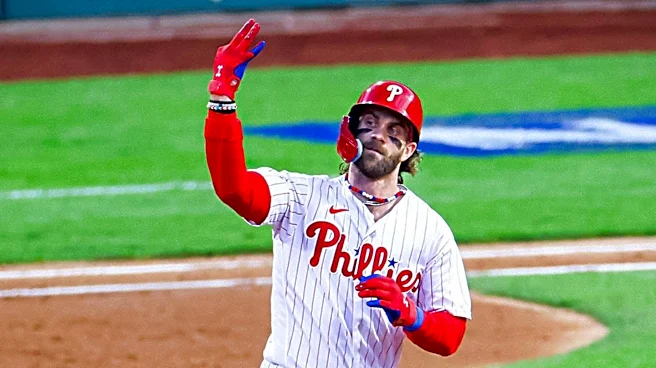
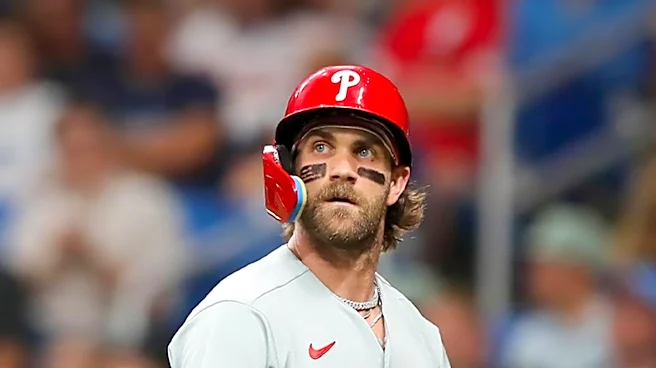
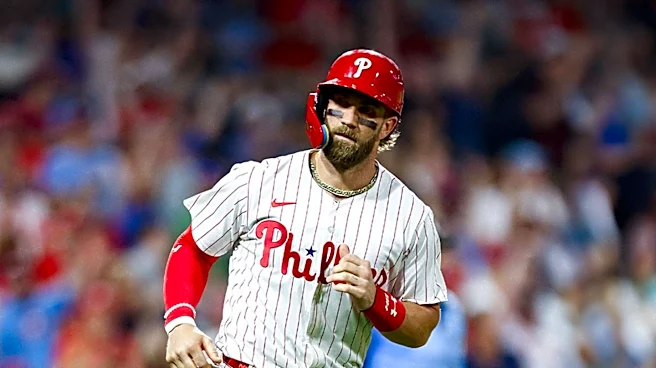
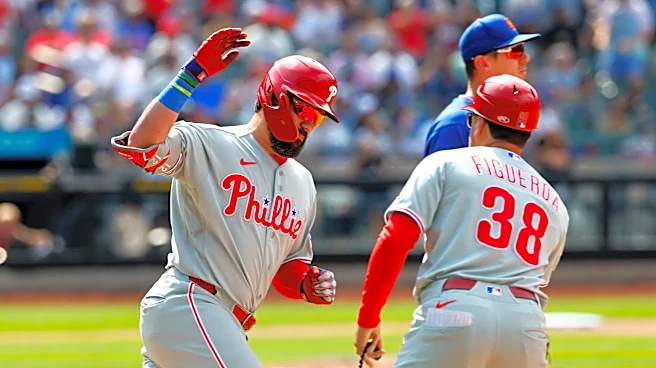
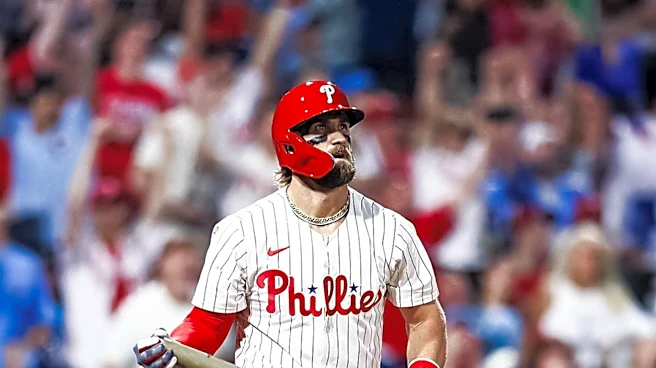
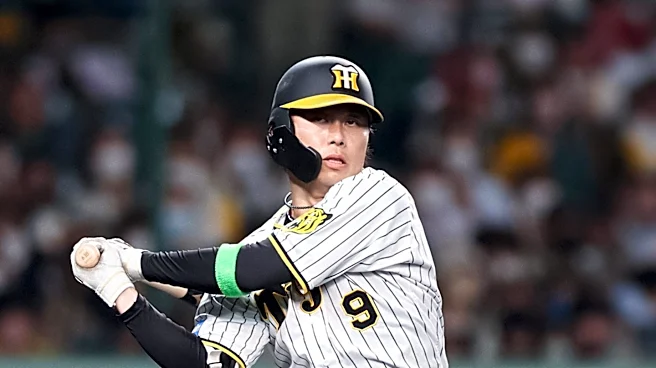
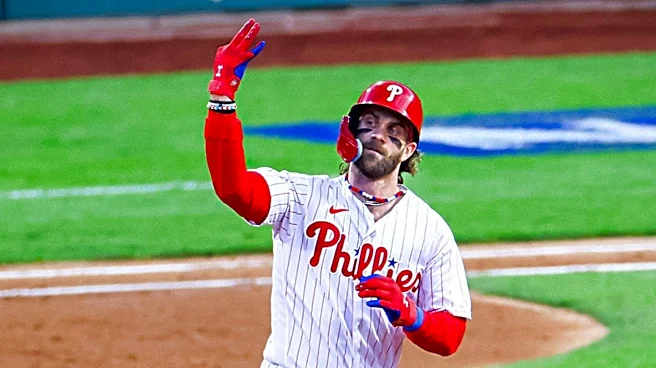
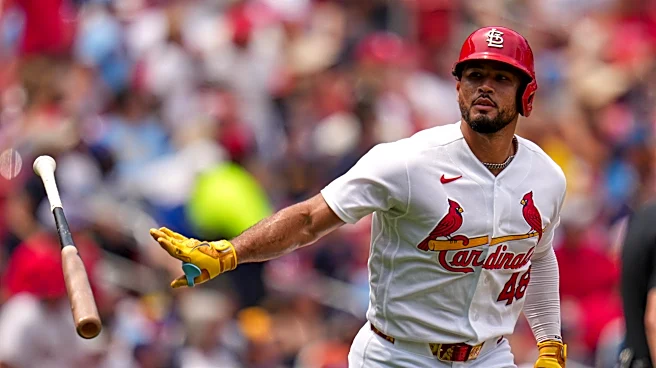
participants, including Jac Caglianone of the Kansas City Royals, Junior Caminero of the Tampa Bay Rays, Jordan Walker of the St. Louis Cardinals, and Ben Rice of the New York Yankees. These players, who are not yet eligible for salary arbitration or free agency, earn less than the prize money offered. The event will also feature well-compensated players like Bryce Harper and Kyle Schwarber from the Philadelphia Phillies, Munetaka Murakami of the Chicago White Sox, and Willson Contreras of the Boston Red Sox.
Why It's Important?
The substantial prize money for the Home Run Derby underscores the financial disparities within MLB, particularly between younger players and established stars. While the $1 million prize is a significant incentive, it also highlights the relatively low salaries of younger players who have not yet reached salary arbitration or free agency. This disparity raises questions about the MLB's pay structure and the financial challenges faced by emerging talent. The event draws attention to the broader economic dynamics within professional baseball, where a few high-profile players command large salaries, while many others earn significantly less. This situation could influence future discussions on player compensation and contract negotiations.
What's Next?
As the Home Run Derby approaches, attention will likely focus on the performance of both the high-earning stars and the younger, less compensated players. The outcome of the event could spark further debate about MLB's salary structure and the need for reforms to ensure fair compensation for all players. Additionally, the visibility of the prize money disparity may prompt discussions among team owners, players' unions, and league officials about potential changes to the arbitration and free agency processes. The event could also influence the strategies of teams in managing their rosters and negotiating player contracts.