



What's Happening?
Fausto Puglisi, the creative director of Roberto Cavalli since 2020, is focused on revitalizing the brand by infusing its rich heritage with a contemporary vision. Puglisi aims to move beyond mere nostalgia, drawing inspiration from Roberto Cavalli's
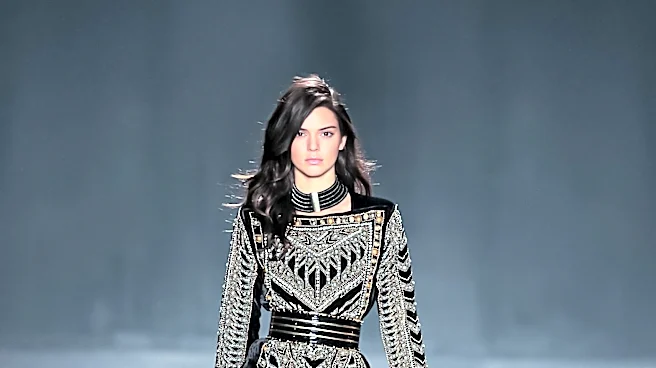
powerful creative legacy of animal prints, nature, and sensuality. He seeks to transform these foundational elements into something modern and uncompromising, making them relevant to younger generations. Puglisi emphasizes that fashion today should evoke emotion and provide an escape, likening it to an 'antidepressant.' He believes in the right to excess, freedom, and excitement in fashion, striving for a 'wow effect' that captivates attention. His approach involves taking the brand's DNA and making it current, ensuring that while the vintage aesthetic appeals to younger audiences, the designs are distinctly of the present. Puglisi's work for the Spring/Summer 2027 collection, for instance, draws on Los Angeles as a reference, reinterpreting archive elements through layered prints, fluid shapes, and defined tailoring, with denim, chiffon, feathers, and crystals creating a wardrobe designed to command attention.
Why It's Important?
Puglisi's direction for Roberto Cavalli is significant for the fashion industry as it represents an effort to evolve an established luxury brand in a rapidly changing market. By focusing on contemporary relevance while honoring heritage, Cavalli aims to capture new consumer segments, particularly younger demographics who are drawn to vintage aesthetics but demand modern interpretations. This strategy could serve as a model for other legacy brands struggling to maintain their appeal. The emphasis on fashion as an emotional experience and an 'antidepressant' reflects a broader shift in consumer values, where clothing is seen not just as attire but as a tool for self-expression and mood enhancement. If successful, this approach could influence design philosophies across the industry, promoting bolder, more expressive collections that prioritize emotional impact over conventional trends. The brand's renewed focus on accentuating the female form through prints, sheer fabrics, and specific proportions also highlights a particular vision of femininity that could resonate with consumers seeking assertive and sensual styles.
What's Next?
Fausto Puglisi will continue to unveil new collections for Roberto Cavalli, with upcoming seasons expected to further refine his vision of contemporary luxury. The brand's future collections will likely continue to explore the balance between its iconic animalier prints and modern design sensibilities, potentially incorporating new materials and silhouettes. The reception of these collections by both critics and consumers will be crucial in determining the long-term success of Puglisi's strategy. Collaborations with celebrities and influencers, a hallmark of Puglisi's career, may also play a role in amplifying the brand's renewed image and reaching wider audiences. The brand's presence in major fashion weeks and its retail performance will be key indicators of its market resurgence. Additionally, as Puglisi aims for an 'effect wow,' future presentations may feature increasingly theatrical or impactful elements to capture attention and reinforce the brand's bold identity.
Beyond the Headlines
Puglisi's philosophy for Roberto Cavalli touches upon deeper cultural shifts in how fashion is perceived and consumed. His assertion that 'today we don't need fashion, we already have everything' suggests a critique of fast fashion and overconsumption, advocating instead for pieces that offer genuine emotional value and a sense of escape. This perspective aligns with a growing consumer desire for authenticity and meaning in their purchases. The brand's re-emphasis on sensuality and the female form, interpreted through a contemporary lens, also speaks to evolving conversations around body positivity and female empowerment, where clothing can be a tool for assertive self-expression rather than conforming to external expectations. By embracing 'excess' and 'freedom,' Puglisi challenges the prevailing trend of minimalist or 'safe' fashion, potentially sparking a broader conversation about the role of maximalism and bold individuality in modern style. This could lead to a re-evaluation of what constitutes 'luxury' in fashion, shifting focus from exclusivity to emotional resonance and personal connection.