





What's Happening?
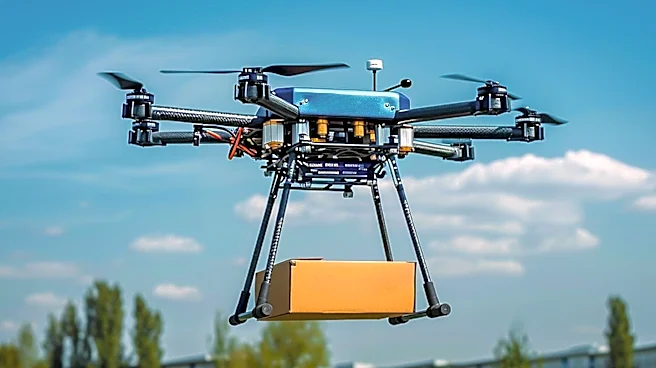
Uber Technologies, Inc. and Zipline have announced a strategic partnership aimed at significantly expanding drone delivery services across the United States. This collaboration will integrate Zipline's autonomous drone technology into Uber Eats, allowing
customers to receive orders in minutes. The first deployments are scheduled to begin later this year in existing Zipline markets, with plans to expand into dozens of U.S. cities. Uber will also make a strategic investment in Zipline, reinforcing their long-term commitment to this initiative. The companies have set an ambitious goal of achieving one million drone deliveries per day by the end of 2029. Zipline, which currently operates on four continents and makes a delivery every 20 seconds, has already completed over 2.7 million deliveries and flown more than 135 million autonomous miles, primarily for healthcare and consumer products.
Why It's Important?
This partnership marks a significant step towards the widespread adoption of autonomous drone delivery in the U.S., potentially transforming the logistics and last-mile delivery sectors. For consumers, it promises faster and more efficient delivery of food and daily essentials, reducing wait times and increasing convenience. For businesses, particularly small businesses, it offers a new, potentially more cost-effective and environmentally friendly delivery option, expanding their reach and operational capabilities. The integration of drones into Uber's existing hybrid delivery network, which includes couriers and sidewalk robots, signifies a strategic move to optimize delivery methods based on specific needs. This development could also alleviate urban traffic congestion and reduce carbon emissions associated with traditional delivery vehicles, contributing to environmental sustainability goals. The substantial investment by Uber underscores confidence in drone technology's commercial viability and its potential to reshape urban infrastructure and consumer behavior.
What's Next?
The initial phase of this partnership will involve launching drone delivery services in existing Zipline markets later this year, followed by a gradual expansion into dozens of U.S. cities. The companies will focus on refining the operational logistics and regulatory compliance necessary for large-scale drone operations. Achieving the target of one million drone deliveries per day by 2029 will require significant infrastructure development, including drone launch and landing sites, and further technological advancements to ensure safety and efficiency. Regulatory bodies, such as the FAA, will play a crucial role in establishing and adapting regulations to accommodate the increasing volume of drone traffic. Public acceptance and trust in drone delivery will also be vital, necessitating clear communication about safety protocols and benefits. This initiative could spur further innovation and competition in the autonomous delivery space, encouraging other companies to invest in similar technologies.
Beyond the Headlines
The widespread adoption of drone delivery, as envisioned by Uber and Zipline, carries profound implications beyond mere convenience. It could fundamentally alter urban planning, potentially leading to the development of new infrastructure for drone operations and influencing where people choose to live and how businesses operate. The concept of 'teleportation' becoming part of everyday life, as described by Zipline's co-founder, suggests a shift in consumer expectations regarding immediacy and accessibility. Ethically, questions around privacy, noise pollution, and the impact on traditional delivery jobs will need to be addressed as drone operations scale. Legally, the framework for airspace management and liability in case of accidents will require continuous evolution. Culturally, the sight of autonomous drones as a common part of the urban landscape could normalize advanced robotics and AI in daily life, paving the way for broader integration of such technologies into society.