





What's Happening?
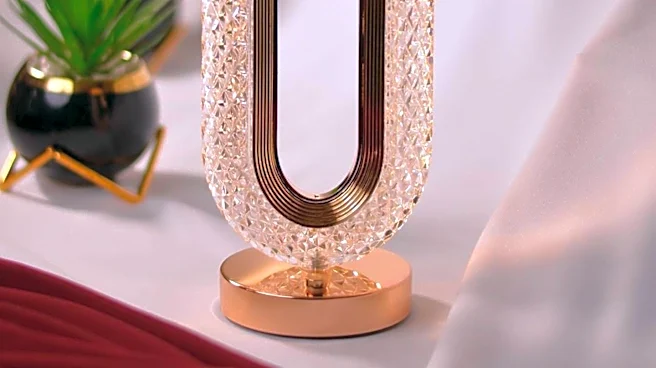
T.J. Maxx is currently seeing a rapid sell-out of a popular accent lamp that draws inspiration from classic Tiffany designs. This lamp offers a modern interpretation of the stained glass aesthetic, featuring a minimalistic net pattern and cream-colored
glass. The design appeals to consumers looking for a blend of vintage charm and contemporary minimalism. Priced at $130, this T.J. Maxx offering presents a significantly more affordable alternative to original Tiffany lamps, which can cost upwards of $20,000. The resurgence of stained glass lamps, including those with a modern twist, is noted as a broader trend in home decor. Social media, particularly Instagram, has contributed to the lamp's popularity, with users highlighting its aesthetic appeal and affordability. The demand is so high that customers are encouraged to check local store availability due to quick stock depletion.
Why It's Important?
The high demand for T.J. Maxx's Tiffany-inspired lamp highlights several key trends in the U.S. retail market and consumer behavior. Firstly, it underscores the continued appeal of vintage aesthetics, particularly when reinterpreted with a modern sensibility, making classic designs accessible to a wider audience. Secondly, the significant price difference between the T.J. Maxx lamp and authentic Tiffany lamps (over $20,000 vs. $130) demonstrates a strong consumer preference for affordable luxury and 'dupes' that offer similar style without the premium price tag. This trend allows consumers to engage with high-end design aesthetics within a budget. Thirdly, the role of social media in driving product popularity and sales is evident, as online mentions and videos contribute to rapid sell-outs. This phenomenon impacts inventory management for retailers like T.J. Maxx, requiring agile responses to sudden spikes in demand for trending items. It also indicates a broader shift in how consumers discover and purchase home decor, increasingly influenced by online communities and viral content.
What's Next?
Given the rapid sell-out of the Tiffany-inspired accent lamp, T.J. Maxx will likely assess the sustained demand for similar vintage-meets-minimalism home decor items. The company may consider increasing production or sourcing more products that align with this aesthetic to capitalize on the trend. Competitors in the home goods market, including other off-price retailers and online platforms like Wayfair, may also introduce their own versions of stained glass or Tiffany-inspired lamps to meet consumer interest. Consumers who missed out on the T.J. Maxx lamp might turn to these alternative retailers or explore secondhand markets for similar styles. The continued influence of social media suggests that future home decor trends will likely emerge and spread rapidly through online platforms, prompting retailers to monitor these channels closely for emerging consumer preferences and product virality.
Beyond the Headlines
This trend extends beyond mere product sales, reflecting a broader cultural appreciation for accessible design and the democratization of luxury aesthetics. The ability for consumers to acquire a 'Tiffany-coded' item at a fraction of the cost challenges traditional notions of exclusivity and status associated with high-end brands. It also speaks to a growing consumer savviness, where shoppers actively seek out value and style without compromising their budget. The phenomenon highlights the power of design inspiration, where iconic styles are reinterpreted and made available to a mass market, fostering a more inclusive approach to home decor. Furthermore, it underscores the environmental aspect of 'fast decor,' where trends can lead to rapid consumption and potential waste, prompting questions about sustainability in the home goods industry as retailers respond to fleeting viral demands.