
What's Happening?
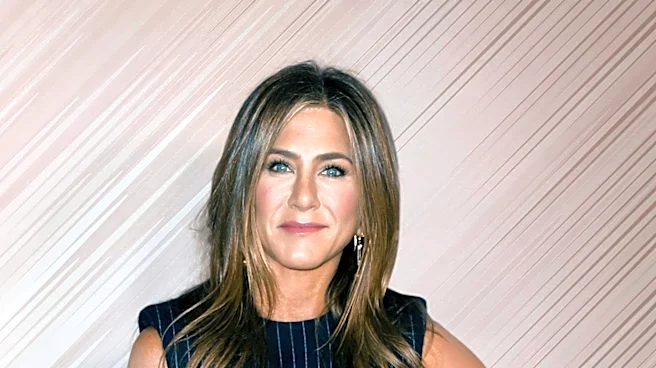
Jennifer Aniston and Catherine, Princess of Wales (Kate Middleton), have both been observed sporting the Japanese manicure technique, positioning it as a notable trend for fall nail aesthetics. Aniston was
seen with this understated look in New York in September, while Princess Catherine adopted it earlier in July for the Wimbledon tennis tournament. This manicure style is characterized by its focus on natural nail health, eschewing heavy gels or lamps. The process involves lightly buffing the natural nail to achieve a smooth, slightly glossy finish, creating a polished yet understated and classic appearance. Additionally, the technique often includes coating the nail and cuticle with a beeswax and mineral paste, which helps to restore moisture, reduce peeling, and improve overall nail condition. This approach makes the most of one's natural nails, offering a clean and soft alternative to darker fall nail colors.
Why It's Important?
The endorsement of the Japanese manicure by prominent figures like Jennifer Aniston and Kate Middleton can significantly influence beauty trends and consumer preferences in the U.S. and globally. Their adoption of this minimalist style highlights a growing preference for natural, health-focused beauty routines over more artificial or elaborate treatments. This shift could lead to increased demand for nail care products and services that prioritize natural nail health, such as beeswax and mineral pastes, and buffing techniques. For the beauty industry, this trend may encourage salons to offer more natural nail treatments and product manufacturers to develop lines catering to this demand. Consumers, particularly those seeking less maintenance or a more subtle aesthetic, may find this trend appealing, potentially altering the market for traditional gel or polish applications. The emphasis on nail health also aligns with broader wellness trends, suggesting a move towards beauty practices that are both aesthetically pleasing and beneficial for personal well-being.
What's Next?
The rising popularity of the Japanese manicure, championed by celebrities, is likely to prompt beauty salons across the U.S. to integrate this service into their offerings. Nail technicians may seek specialized training in the technique, which involves specific buffing methods and the application of beeswax and mineral pastes. Concurrently, beauty brands are expected to capitalize on this trend by developing and marketing products tailored to the Japanese manicure, such as specialized buffing tools, cuticle treatments, and nail-strengthening formulas. We may see an increase in educational content from beauty influencers and publications demonstrating how to achieve this look at home, further democratizing the trend. This could also lead to a broader conversation within the beauty industry about sustainable and health-conscious nail care practices, potentially influencing future product development and service standards. The trend's momentum will likely be sustained as more individuals seek natural and understated beauty solutions.
Beyond the Headlines
The embrace of the Japanese manicure by high-profile individuals like Jennifer Aniston and Kate Middleton signifies more than just a fleeting beauty trend; it reflects a deeper cultural shift towards authenticity and natural beauty. In an era often dominated by elaborate and sometimes artificial beauty enhancements, this minimalist approach champions the inherent beauty of natural nails and overall nail health. This trend could subtly challenge the prevailing beauty standards that often promote complex and time-consuming routines, encouraging a more understated and self-accepting aesthetic. Ethically, it promotes a less chemically intensive approach to beauty, which could appeal to environmentally conscious consumers and those concerned about the long-term effects of harsh nail treatments. Culturally, it aligns with a broader movement towards wellness and self-care, where beauty practices are viewed not just as superficial adornments but as integral components of holistic well-being. This shift may encourage a re-evaluation of what constitutes 'polished' and 'fashionable' in the beauty landscape.