



What's Happening?
The National Hockey League (NHL) has implemented new collective bargaining agreement rules, effective September 16, which significantly expand the definition of a 'veteran' player for preseason games. Previously, a veteran was defined by having at least
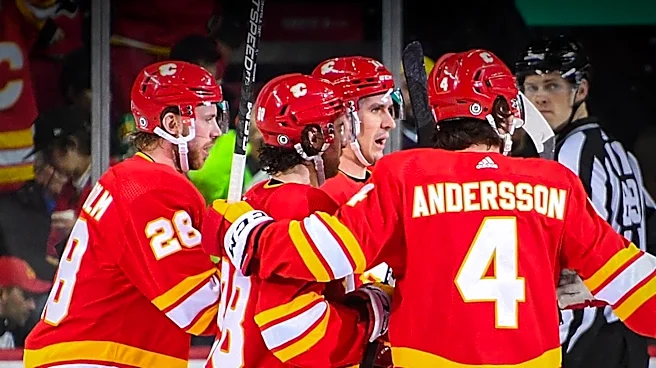
100 career NHL games, 30 NHL games in the previous season, or being a first-round pick from the most recent draft. The updated criteria now include players with at least 400 combined career AHL and NHL games, first-round picks from the past five drafts, and second-round picks from the past three drafts. This change directly impacts teams like the Seattle Kraken, who are required to dress at least eight veterans for each preseason game. The Kraken's preseason roster has been notably young, with many prospects qualifying as veterans under the new expanded rules due to their draft status. For instance, first-round picks like Eduard Sale (2023) and Shane Wright (2022), and second-round picks such as Julius Miettinen (2024) and Nathan Villeneuve (2024), now count towards the veteran quota. This has allowed the Kraken to field a younger lineup in their initial preseason games against the Vancouver Canucks and Calgary Flames.
Why It's Important?
The expanded definition of 'veteran' in the NHL's collective bargaining agreement has significant implications for player development and team roster management, particularly during the preseason. By allowing more prospects to qualify as veterans, teams gain greater flexibility in evaluating their younger talent in competitive settings without violating league rules. This can accelerate the development of promising players by exposing them to NHL-level competition earlier. For teams like the Seattle Kraken, who are still building their franchise, this rule change is particularly beneficial as it enables them to assess a wider pool of their drafted players. It also means that established NHL players with over 100 games are still limited to two preseason appearances, ensuring that younger players get more opportunities. This shift could lead to more dynamic preseason games, as teams balance the need to evaluate prospects with the requirement to meet veteran quotas, potentially influencing future roster decisions and the overall competitiveness of the league.
What's Next?
Teams across the NHL will continue to adapt their preseason strategies to leverage the new veteran rules. The Seattle Kraken, having already made significant roster cuts and reassignments to their AHL affiliate, the Coachella Valley Firebirds, will use their remaining preseason games to finalize their Opening Night roster. The expanded veteran definition will likely continue to influence which prospects receive playing time, offering them crucial experience against NHL-caliber opponents. This could lead to more prospects making the jump to the NHL sooner, or at least gaining valuable insights into what is required at the professional level. Over the long term, the rule change might encourage teams to invest more heavily in their draft and development systems, knowing that their high-round picks can contribute to preseason requirements even before they become established NHL players. The league will likely monitor the impact of these rules on player development and preseason game quality in the coming seasons.
Beyond the Headlines
The subtle shift in the NHL's veteran definition reflects a broader trend in professional sports towards prioritizing player development and strategic roster management. By broadening the criteria, the league acknowledges the value of high-draft picks and their potential to contribute, even if they haven't accumulated extensive NHL game experience. This move could be seen as an investment in the future talent pool of the league, ensuring that promising young players receive adequate exposure and evaluation opportunities. It also highlights the intricate balance between veteran leadership and youth development within a team's structure. Ethically, it provides a clearer pathway for prospects to gain experience, potentially reducing the pressure on older veterans to play an excessive number of preseason games. Culturally, it could foster a more dynamic and exciting preseason, as fans get to see more of their team's future stars in action. This rule change, while seemingly minor, could have a lasting impact on how NHL teams scout, draft, and develop their talent.