






What's Happening?
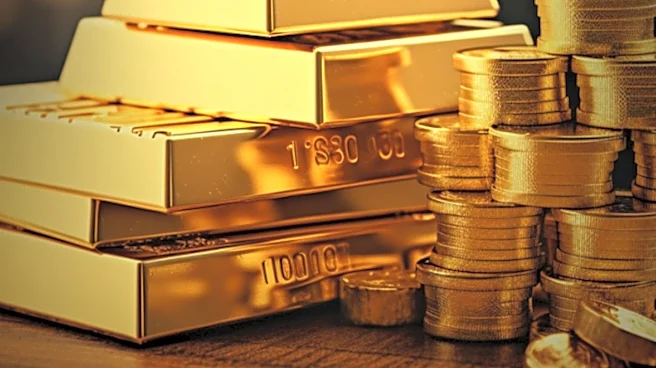
The World Gold Council has reported that despite a reduction in exposure to physically backed gold exchange-traded funds (ETFs) in June, the first half of the year saw positive inflows. Global gold ETFs reached $526 billion in assets under management
by the end of June, despite a 6% decline due to lower gold prices. North America experienced the largest outflows, attributed to lower gold prices and changing expectations for U.S. interest rates. Asia, however, recorded its strongest first-half inflows on record, while Europe also saw healthy inflows. The council notes that geopolitical tensions and economic uncertainty continue to support demand for gold as a safe-haven asset.
Why It's Important?
The performance of gold ETFs is a significant indicator of investor sentiment towards gold as a safe-haven asset, especially in times of economic uncertainty. The positive inflows in the first half of the year suggest that despite market volatility, investors are still seeking refuge in gold. This trend is particularly relevant for North American markets, where outflows were driven by expectations of higher interest rates and a stronger dollar. The continued demand for gold in Asia and Europe highlights the global nature of gold investment and its role in portfolio diversification. The council's report underscores the ongoing importance of gold in financial markets, especially amid geopolitical tensions and economic uncertainties.
What's Next?
The World Gold Council anticipates that flows into North American gold ETFs may stabilize in the second half of the year. While the base-case outlook suggests relatively steady gold prices, ongoing geopolitical tensions and economic uncertainties could continue to drive demand for gold. The council expects that these factors, along with financial market risks, will sustain interest in gold ETFs as a strategic safe-haven allocation. Investors will likely continue to monitor interest rate decisions and geopolitical developments closely, as these will influence gold prices and ETF flows.