




What's Happening?
Memphis, Tennessee, has been identified as the best U.S. road trip destination, according to a new report by luxury vacation rental company Wander. The city earned the top spot primarily due to its relatively light traffic congestion and easy accessibility
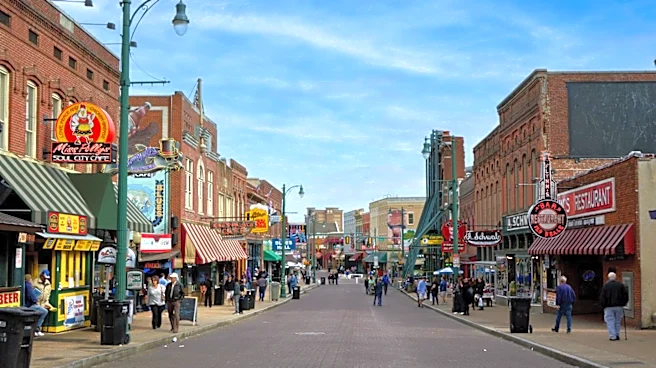
via Interstates 40, 55, and 22. The study, which also considered factors like walkability, safety, green space, climate, and family-friendly attractions, highlighted that less time spent in traffic contributes to a more enjoyable and less stressful road trip experience. Beyond its favorable traffic conditions, Memphis offers a rich array of attractions, including the legendary live music venues of Beale Street, world-renowned barbecue joints such as Central BBQ and Charlie Vergos’ Rendezvous, and significant landmarks like Graceland and the National Civil Rights Museum. Other cities recognized in the top three include Buffalo, New York, which ranked second due to its low noise pollution and proximity to Niagara Falls, and Salt Lake City, Utah, which secured the third spot with its high safety score and access to national parks and the Wasatch Mountains.
Why It's Important?
This designation for Memphis is significant for the city's tourism and economic development, potentially drawing more visitors who prioritize convenient and enjoyable travel experiences. For the U.S. travel industry, the report underscores a growing preference among travelers for road trips that offer both accessibility and a wealth of attractions without the hassle of heavy traffic. This trend can influence how cities market themselves to tourists, emphasizing factors like ease of access and local experiences over just popular landmarks. The focus on reduced traffic congestion as a key metric for road trip desirability could also prompt urban planners and local governments in other cities to consider infrastructure improvements that enhance visitor flow. Furthermore, the recognition of cities like Buffalo and Salt Lake City highlights the diverse appeal of U.S. destinations, from cultural and culinary hubs to natural wonders, encouraging a broader distribution of tourism dollars across different regions.
What's Next?
Following this recognition, Memphis is likely to see an increase in road trip tourism, which could lead to a boost in local businesses, including restaurants, hotels, and entertainment venues. City officials and tourism boards may leverage this ranking in their marketing campaigns to attract more visitors. Other cities on the list, such as Buffalo and Salt Lake City, could also experience similar positive impacts. The report's methodology, which emphasizes factors like traffic and noise pollution, might influence future urban planning and tourism development strategies across the country, with cities potentially investing in infrastructure to improve traffic flow and enhance the overall visitor experience. Travelers can expect more resources and guides to emerge, highlighting these top-ranked destinations and offering itineraries that capitalize on their accessibility and attractions. This trend could also lead to a greater focus on sustainable travel practices, as road trips often offer a more environmentally conscious alternative to air travel for domestic tourism.
Beyond the Headlines
The Wander report's emphasis on traffic congestion as a critical factor for road trip satisfaction reveals a deeper insight into modern travel preferences: the desire for efficiency and reduced stress. In an increasingly fast-paced world, travelers are seeking experiences that minimize friction and maximize enjoyment. This goes beyond just avoiding traffic; it speaks to a broader demand for seamless travel, from booking to on-the-ground exploration. The success of cities like Memphis, which offer rich cultural experiences alongside practical advantages, suggests a shift in what constitutes a 'desirable' destination. It highlights the value of a holistic travel experience where logistical ease complements cultural immersion. This could also subtly influence urban development, encouraging cities to balance growth with livability and accessibility, not just for residents but also for visitors. The report implicitly champions a slower, more deliberate form of travel, allowing for deeper engagement with local communities and attractions, fostering a more authentic and memorable journey.