





What's Happening?
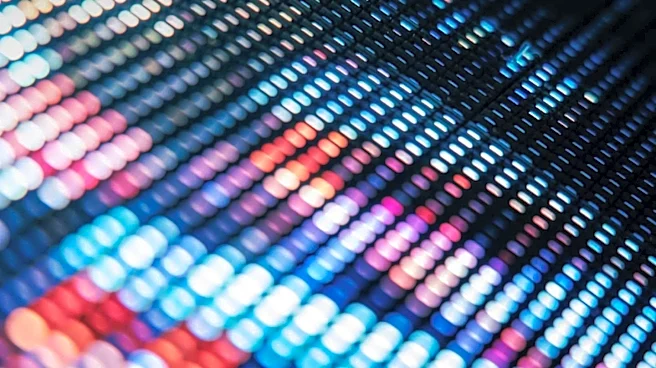
Researchers have developed a cracking-assisted transfer printing (CATP) technology that significantly improves the resolution of quantum dot light-emitting diode (QD-LED) displays. This innovative method allows for high-resolution pixel patterning by
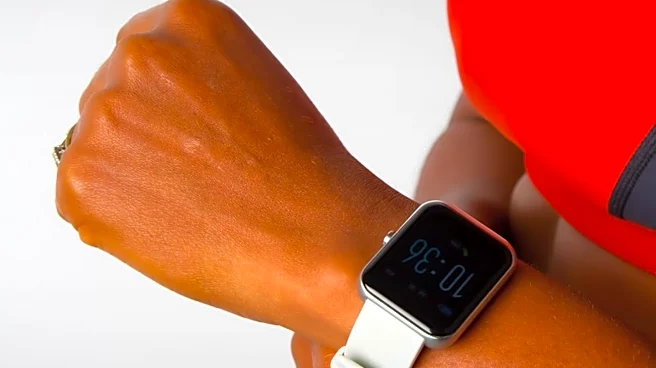
utilizing a controlled cracking process to transfer quantum dots onto target substrates. The CATP technique enhances the photoluminescence quantum yield (PLQY) of QD films, resulting in superior electro-optical properties compared to traditional methods. The technology has been successfully applied to create flexible and wearable QD-LED devices, highlighting its potential for diverse applications in the display industry.
Why It's Important?
The advancement in QD-LED display technology through CATP offers significant benefits for the electronics industry, particularly in the development of high-resolution and flexible displays. This innovation could lead to more efficient and cost-effective manufacturing processes, enhancing the competitiveness of companies in the display market. The improved PLQY and electro-optical properties of QD films can result in brighter and more energy-efficient displays, appealing to consumers seeking high-quality visual experiences. Additionally, the ability to produce flexible displays opens up new possibilities for wearable technology and other applications requiring adaptable screen solutions.