

What's Happening?
The U.S. power grid faces a growing crisis, with demand projected to increase by nearly 40% by 2035, a figure some experts consider conservative. This surge is driven by the rise of electric vehicles, data centers, and widespread electrification across
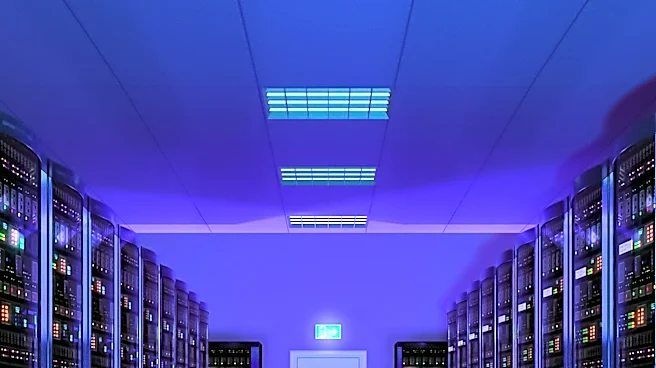
various market sectors. Utilities are struggling to meet this demand, with expansion efforts hampered by regulatory hurdles, permitting delays, and community opposition, leading to project cancellations and increased operational costs. As a result, large-scale data centers and advanced manufacturing facilities are experiencing significant delays, sometimes up to 10 years, in securing grid interconnections. This situation is prompting a shift towards dedicated, on-site, or 'behind-the-meter' (BTM) power solutions as a viable alternative to traditional utility power, offering faster deployment and greater reliability.
Why It's Important?
The grid crisis poses a substantial threat to economic growth and technological advancement in the U.S. Delays in power provision can lead to the cancellation of major industrial and technological projects, resulting in significant opportunity costs and hindering innovation. The adoption of BTM power solutions offers a critical pathway to circumvent these challenges, providing reliable and timely electricity for energy-intensive operations. These solutions can be deployed within 12-18 months, are custom-designed to match specific plant loads, and offer contractual commitments on uptime, which utilities typically do not. This shift empowers businesses to control their energy supply, reducing dependence on an overburdened grid and mitigating risks associated with power interruptions. The viability of BTM solutions is particularly high for facilities with available land, access to reliable natural gas, and favorable permitting environments, making them a strategic consideration for new developments and expansions.
What's Next?
The trend towards BTM power solutions is expected to accelerate as the U.S. grid continues to face capacity constraints and expansion challenges. Regulatory bodies, such as ERCOT in Texas, are already adapting their processes, moving towards 'Batch Interconnect' systems to manage overwhelming power requests. This indicates a growing recognition of the need for alternative power strategies. Developers of BTM systems will likely see increased demand for efficient, reliable generator sets and custom-designed power delivery systems. Third-party providers are emerging to capitalize, install, and operate these systems, allowing facility owners to avoid upfront capital expenses and focus on their core operations. Policymakers and citizens, particularly in regions like Texas, are demanding more rigorous evaluation of power demands to ensure grid stability and access, which could further incentivize the adoption of decentralized power generation models.
Beyond the Headlines
The rise of behind-the-meter power solutions signifies a fundamental shift in the U.S. energy paradigm, moving towards a more decentralized and resilient grid architecture. This decentralization could have profound implications for energy policy, market structures, and the role of traditional utilities. It raises questions about grid equity, as facilities with the resources to implement BTM solutions gain a competitive advantage, potentially leaving smaller entities or residential consumers more vulnerable to grid instability. Furthermore, the reliance on natural gas for many BTM solutions, while addressing immediate reliability concerns, also presents a challenge to long-term decarbonization goals. This trend could spur innovation in smaller-scale, localized renewable energy solutions and advanced energy storage technologies to integrate with BTM systems, creating a more diverse and robust energy ecosystem that balances reliability, cost, and environmental impact.