





What's Happening?
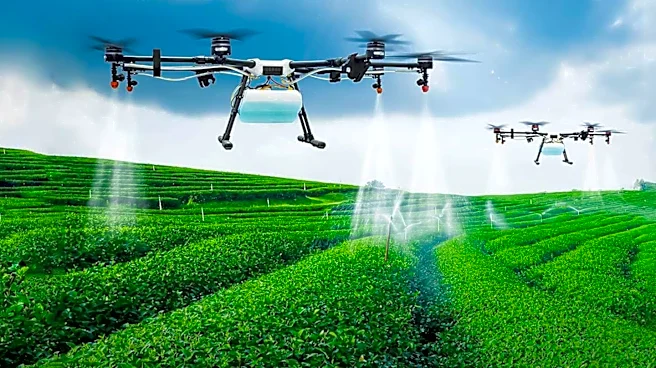
ZenaTech, through its subsidiary ZenaDrone, has announced the completion of an initial Version 1 prototype for its IQ Octo drone. This autonomous drone is specifically designed for precision agriculture, focusing on spraying and seeding applications.
The IQ Octo is an octocopter, powered by batteries, and is engineered to fly for 20 to 25 minutes per charge, carrying a payload of up to 25 kilograms of seeds or liquid. Its primary function is to precisely apply fertilizers, crop-protection products, and distribute seeds by following programmed flight paths at low altitudes over fields. This technology aims to reduce input costs for farmers, prevent crop damage and soil compaction, and improve the efficiency of planting and treatment operations, especially in difficult terrains. Field testing for the IQ Octo Version 1 is expected to commence shortly at ZenaTech's Arizona facility. Future iterations, such as Version 2, are planned to support solar panel maintenance, swarm capabilities, automated refilling, and a folding design.
Why It's Important?
The introduction of the IQ Octo by ZenaDrone signifies a notable advancement in precision agriculture within the U.S. market. Precision agriculture is identified as one of the fastest-growing sectors in the drone industry, with market analysts projecting over 30% annual growth in the next five years. This drone technology offers significant benefits to U.S. farmers by enabling more targeted and efficient use of resources like chemicals, seeds, water, fuel, and labor. It can help mitigate issues such as soil compaction and crop damage caused by heavy machinery, and enhance worker safety by reducing manual exposure to agricultural chemicals. For ZenaTech, this expansion into autonomous spraying and seeding positions its 'Drone as a Service' business to capture a substantial share of this expanding market, creating long-term value through recurring service and data opportunities. The development also highlights the increasing integration of AI, machine learning, and predictive analytics into agricultural practices, driving operational efficiency and sustainability.
What's Next?
The immediate next step for ZenaTech's ZenaDrone is the commencement of field testing for the IQ Octo Version 1 at its Arizona facility. This testing phase will be crucial for validating the drone's performance and capabilities in real-world agricultural settings. Following successful testing, further updates on development milestones are anticipated. The company also plans to develop a Version 2 of the IQ Octo, which will expand its applications to include solar panel maintenance, swarm capabilities, and automated refilling. This suggests a continuous innovation pipeline aimed at broadening the drone's utility and market reach. The success of these developments could lead to wider adoption of drone-based precision agriculture services across the U.S., potentially influencing agricultural practices and resource management strategies nationwide.
Beyond the Headlines
The deployment of advanced autonomous drones like the IQ Octo in U.S. agriculture carries broader implications beyond immediate operational efficiencies. Ethically, the increased automation in farming raises questions about the future of agricultural labor and the potential for job displacement, while also creating new roles in drone operation and data analysis. Legally, the widespread use of agricultural drones will necessitate clear regulatory frameworks concerning airspace management, data privacy, and the application of chemicals, especially near residential areas or sensitive ecosystems. Environmentally, the precise application of fertilizers and pesticides could lead to reduced chemical runoff and improved soil health, contributing to more sustainable farming practices. Culturally, the integration of high-tech solutions into traditional farming may shift perceptions of agriculture, attracting a new generation of tech-savvy farmers and fostering innovation within the sector. This technological shift could also influence food production costs and ultimately, consumer prices and food security.