



What's Happening?
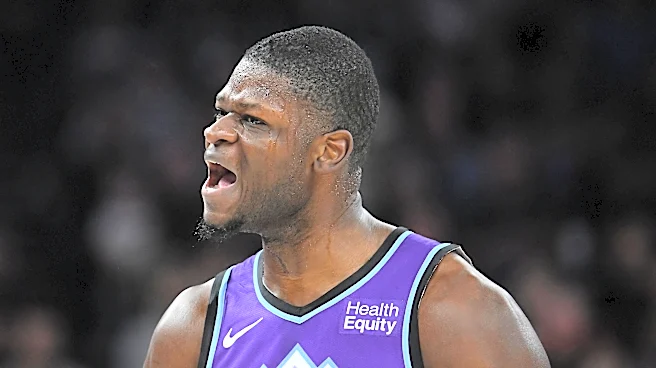
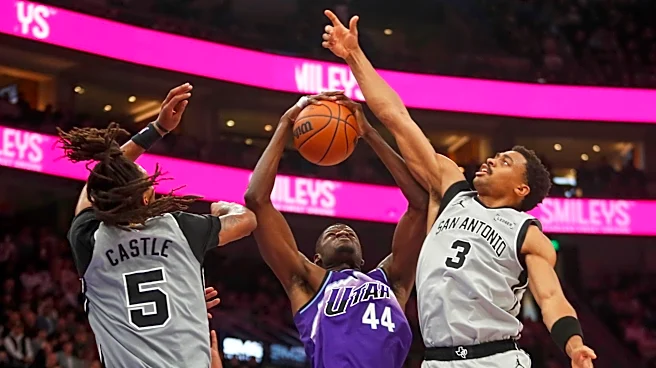
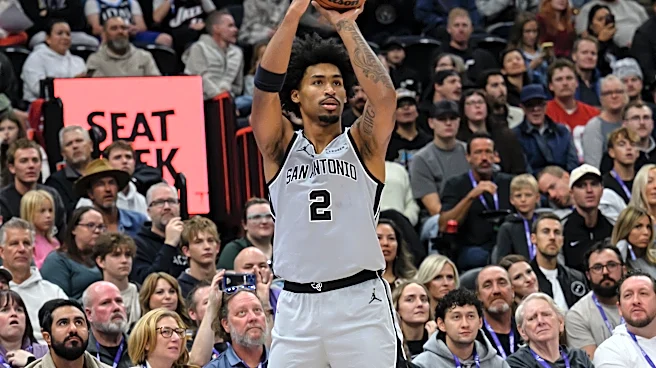
Darryn Peterson, a rookie guard for the Utah Jazz and the No. 2 overall pick in the 2026 NBA Draft, recorded 13 points, five rebounds, two assists, and one steal in 31 minutes during the Jazz's 132-107 victory over the Los Angeles Clippers. Despite the team's
win, Peterson struggled with his shooting, making only 3 of 10 field goal attempts, including 2 of 4 from beyond the arc, and 5 of 7 free throws. This performance comes amidst a challenging start to the season for the Jazz, who improved to 2-13 with this win, their first since October 23. Peterson has been a notable performer for the team, averaging 17.1 points per game as a rookie. His continued significant role in the offense is expected, especially with key players Lauri Markkanen (hand) and Jaren Jackson Jr. (knee) currently sidelined.
Why It's Important?
Peterson's performance highlights the typical challenges faced by high-draft-pick rookies in the NBA. While his overall scoring average of 17.1 points per game indicates his potential and importance to the Jazz, individual game struggles, particularly with shooting efficiency, are common as young players adapt to the professional level. For the Utah Jazz, Peterson represents a significant part of their future, and his development is crucial for the team's long-term competitiveness. His continued high usage rate, necessitated by injuries to veteran players, provides valuable experience but also exposes his current limitations. The team's reliance on him, even through shooting slumps, underscores their commitment to his growth and integration into a primary offensive role. This period of development is critical for Peterson to refine his game and become a more consistent contributor.
What's Next?
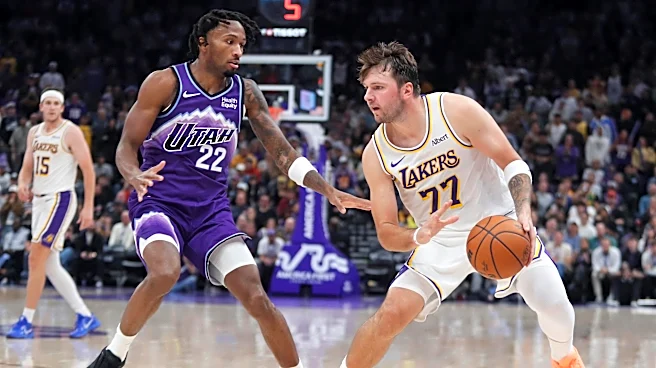
With Lauri Markkanen and Jaren Jackson Jr. still out due to injuries, Darryn Peterson is expected to maintain a substantial role in the Utah Jazz's offense. This continued playing time will offer him more opportunities to develop his game, improve his shooting consistency, and adapt to the demands of the NBA. The Jazz will likely continue to integrate him into their offensive schemes, allowing him to learn through experience, even if it means enduring occasional inefficient shooting nights. His next opportunity to play will be when the Jazz visit the Lakers. For Peterson, the focus will be on refining his shot selection and efficiency while continuing to contribute in other statistical categories like rebounds and assists, which he demonstrated in the game against the Clippers.
Beyond the Headlines
Peterson's rookie season trajectory reflects a broader trend in the NBA where top draft picks are often given significant responsibilities early in their careers, sometimes leading to fluctuating performance. This approach prioritizes long-term development over immediate statistical efficiency, acknowledging that young players need time and experience to mature into their roles. For the Jazz, investing heavily in Peterson's playing time, even during a difficult season, signals a commitment to building around young talent. This strategy can foster player loyalty and accelerate development, but it also requires patience from the franchise and its fanbase. The balance between allowing rookies to make mistakes and demanding efficient play is a constant challenge for NBA coaching staffs, especially when key veterans are unavailable.