






What's Happening?
SoftBank Group has reported a significant net loss of approximately $7.1 billion for the recent quarter, marking its first quarterly loss in two years. This financial downturn is largely attributed to substantial investments in artificial intelligence
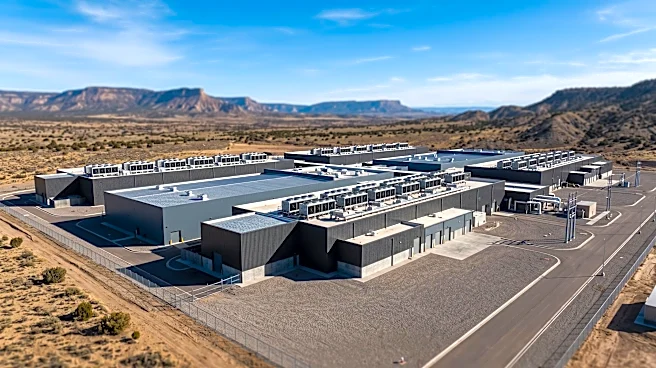
(AI) infrastructure, particularly a $3.7 billion charge related to a U.S. data center, and sharply increased financing expenses. The company's investment strategy has become heavily concentrated in AI, with a $64.6 billion stake in OpenAI and considerable commitments to AI data centers, which has amplified both concentration risk and funding demands. SoftBank's shares have declined by nearly 50% since June, influenced by ratings downgrades and growing skepticism regarding the AI industry's viability. To sustain its AI ventures, SoftBank has resorted to issuing over $11 billion in high-risk, non-investment grade bonds, setting a new record for the largest corporate junk bond offering.
Why It's Important?
SoftBank's substantial loss and its aggressive pivot towards AI investments highlight the significant financial risks associated with the burgeoning AI sector. The company's reliance on high-risk debt, such as junk bonds, to fund its AI ambitions signals potential instability within its financial structure and raises concerns about the broader market's perception of the AI boom. This situation could influence investor confidence in AI-focused companies, potentially leading to a more cautious investment climate. The scale of SoftBank's commitments, particularly in U.S. data centers, indicates a massive capital flow into AI infrastructure, which could have ripple effects on the technology sector, real estate markets for data centers, and the financial instruments used to fund such large-scale projects. The company's financial health, given its extensive portfolio, could also impact various startups and established tech firms it has invested in globally.
What's Next?
SoftBank faces immediate challenges in managing its substantial AI-related commitments and addressing its increased funding burden. The company's ability to secure third-party equity, non-recourse financing, and hyperscaler customers for its infrastructure projects will be crucial for generating long-duration revenue. The planned Nasdaq listing of Arm, a SoftBank subsidiary, is viewed as a key event for potential value crystallization, which could provide much-needed liquidity. However, continued volatility in AI asset values and potential further ratings downgrades could complicate these efforts. Stakeholders will closely monitor SoftBank's loan-to-value ratio to ensure it remains within acceptable limits. The company's strategy for managing its high-risk debt and its ongoing execution across its key AI assets, including OpenAI and SB Energy, will determine its financial trajectory in the coming quarters.
Beyond the Headlines
SoftBank's current financial struggles and its deep dive into AI investments underscore a broader market tension between the immense potential of AI and the significant capital expenditure and inherent risks involved in its development. The company's situation could serve as a bellwether for the sustainability of the current AI investment frenzy, potentially signaling a need for more prudent financial strategies in the sector. The reliance on junk bonds to finance cutting-edge technology also raises questions about the risk appetite of institutional investors and the potential for systemic financial risks if the AI bubble were to burst. Furthermore, the concentration of AI infrastructure development in specific regions, such as the U.S., could lead to localized economic impacts, including job creation and increased demand for energy and resources, while also raising concerns about data sovereignty and technological dependency.