







What's Happening?
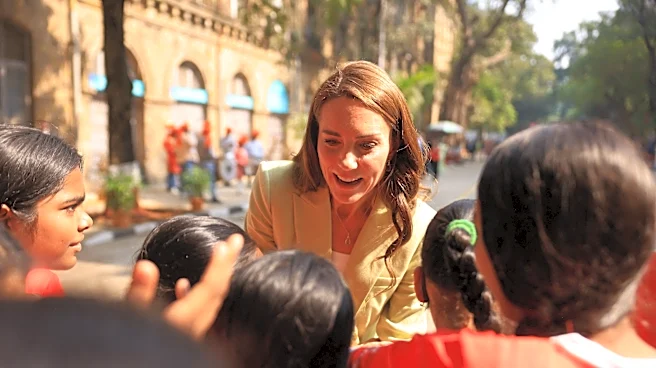
During her visit to the Nowrosjee Wadia Maternity Hospital in Mumbai, the Princess of Wales, Kate Middleton, offered comfort to a grieving mother, Jyoti Karande, who recently lost one of her newborn twin daughters. Ms. Karande, 29, had given birth prematurely,
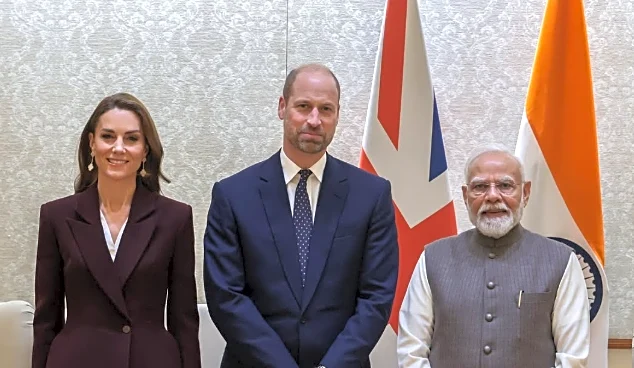
and while one twin sadly passed away, the other remains in intensive care. Kate Middleton reportedly crouched down to Ms. Karande's eye level, grasped her hand, and offered words of encouragement, saying, "Stay strong. Well done, you've clearly been very very brave." The Princess also met Merlin Samuel, 31, mother of two-year-old Gabriel Princemon, a 'miracle baby' who was resuscitated for 45 minutes after birth. Kate Middleton discussed the emotional trauma associated with such health issues, emphasizing the profound impact beyond physical recovery. This visit was part of the final day of the Prince and Princess of Wales's three-day trip to India.
Why It's Important?
The Princess of Wales's engagement at the Mumbai maternity hospital highlights the global importance of maternal and early childhood health, a cause she has long championed through her Royal Foundation Centre for Early Childhood. Her personal interaction with grieving and struggling mothers underscores the universal challenges faced by families during critical periods of childbirth and infancy. This visit serves to draw international attention to the need for robust maternity care and support systems, particularly in regions where resources may be strained. By engaging directly with individuals, Kate Middleton humanizes these issues, making them more relatable and fostering empathy among a wider audience. Her actions can inspire greater philanthropic efforts and policy discussions aimed at improving maternal and child health outcomes worldwide, reinforcing the role of public figures in advocating for vulnerable populations.
What's Next?
The Princess of Wales's continued focus on early childhood development and maternal health is expected to remain a cornerstone of her public work. This visit to Mumbai could inform future initiatives and partnerships, potentially leading to collaborations between UK and Indian healthcare organizations or charities. Her advocacy may encourage increased funding and research into neonatal care, grief counseling for parents, and support for 'miracle babies' and their families. The personal nature of her engagement could also inspire other public figures to use their platforms to address sensitive health issues, fostering a more compassionate and supportive global dialogue around childbirth and early life challenges. The Royal Foundation Centre for Early Childhood will likely continue to expand its reach and influence, drawing on such experiences to shape its strategic objectives.
Beyond the Headlines
Beyond the immediate impact of comfort and awareness, this visit touches upon deeper cultural and ethical considerations surrounding childbirth and loss. The Princess's engagement with mothers facing profound challenges highlights the emotional and psychological toll of premature births and infant mortality, issues that often remain unspoken. Her acknowledgment of the 'trauma' involved in a child's health struggles underscores the need for comprehensive mental health support for parents, an area that is increasingly recognized as crucial in healthcare. This interaction also subtly reinforces the idea of shared human experience across cultures, demonstrating that grief, hope, and resilience are universal. It encourages a more holistic view of healthcare that extends beyond physical treatment to encompass emotional and psychological well-being, particularly for new mothers and their families.